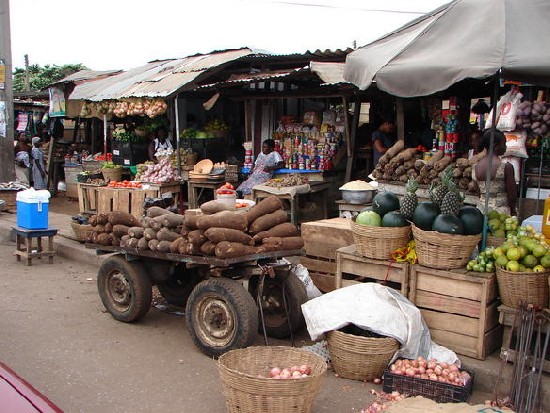
A Ghanaian market, a scene from Drumbeats where Jess waits for Chrissie
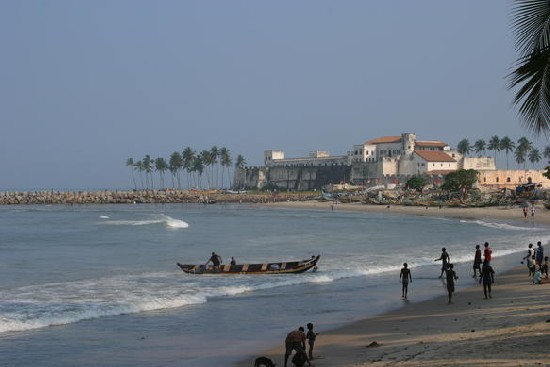
The beach near Cape Coast, Biriwa Beach, a scene from Drumbeats where Jess goes with Jim after the horrors of visiting the old slave castle
A Ghanaian market, a scene from Drumbeats where Jess waits for Chrissie
The beach near Cape Coast, Biriwa Beach, a scene from Drumbeats where Jess goes with Jim after the horrors of visiting the old slave castle
Here it is!
The story of love, joy, tragedy and danger set against the backdrop of a war-torn African country …
So here at last is the link to my new novel, Drumbeats, available from Amazon, in both Kindle ebook and paperback formats:
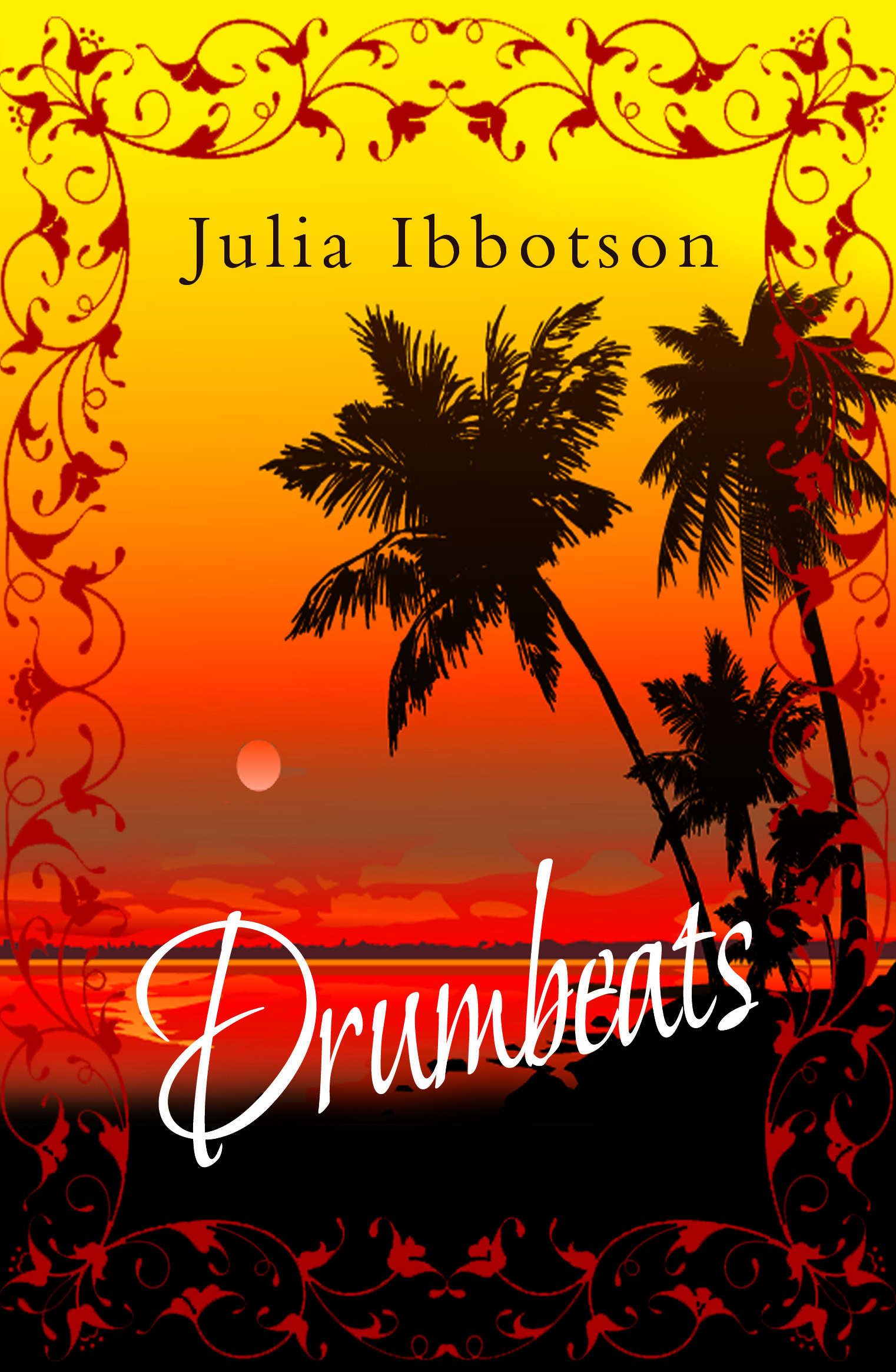
A reminder of the cover too!
It’s very exciting as it’s already won an award at the Hollywood Book Festival 2014 (this month, July) when it was barely hot off the press. I’m touring with it in September with Fiction Addiction Book Tours and have a couple of articles on Indie Author News coming up in August. I’ll post the links when they appear. We’ll also be at the Festival of Romantic Fiction in Leighton Buzzard in September; will link that later on too.
This coming week I’m going to be busy creating a book trailer video to post up here shortly. Hope you enjoy it!
What a lovely chat with the wonderful Janice Ross yesterday on US blogtalkradio show, Saturday Cultural Cocktails! The hour flew by so quickly. We talked about my new book Drumbeats which is due out in the next couple of weeks and will be available through Amazon in paperback and ebook formats. Because it’s set in Ghana (West Africa) in the 1960s we talked about preparation for writing, ie research, and how to become immersed in the atmosphere of a book so that you can write authentically. We talked about my “little box of tricks”, tips for writers, and the fine line between fiction and reality. Do I log in the back of my mind places and people I meet so that I can use them in my novels? Well, maybe, but they have a habit of changing and going their own way as I write. Hear more if you click on the link below …
http://www.blogtalkradio.com/culturalcocktails/2014/06/28/saturday-cocktails-w-julia-Ibbotson
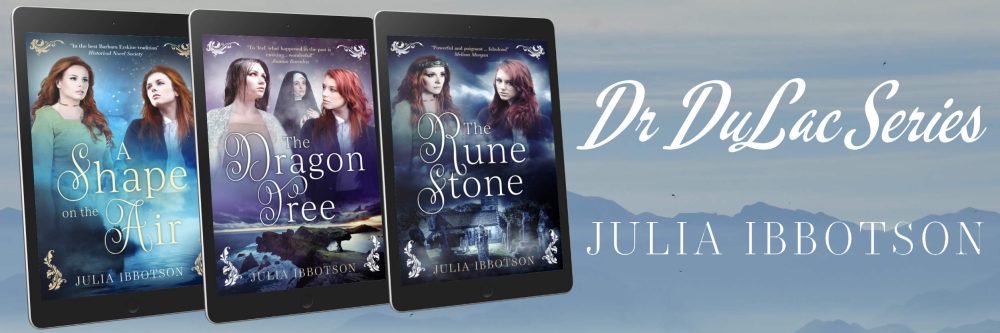
 My new novel, Drumbeats, is the first of a trilogy following Jess through her life. Drumbeats starts it all off in the mid-1960s as eighteen year old English student, Jess, flees to West Africa on a gap year, escaping her stifling home background for freedom to become a volunteer teacher and nurse in the Ghanaian bush. Apprehensively, she leaves her first real romantic love behind in the UK, but will she be able to sustain the bond while she is away? With the idealism of youth, she hopes to find out who she really is, and do some good in the world, but little does she realise what, in reality, she will find that year: joys, horrors, tragedy. She must find her way on her own and learn what fate has in store for her, as she becomes embroiled in the poverty and turmoil of a small war-torn African nation under a controversial dictatorship. Jess must face the dangers of both civil war and unexpected romance. Can she escape her past or will it always haunt her?
You can find the recording of the live radio show (aired this morning) at the link below. It was a great session and a very interesting experience – all adds to life’s rich pattern. There were laughs, tips, ideas – and sharing the fun and hard work of writing creatively. Why did I write my book The Old Rectory, what is different about it from the usual memoir? Did I try out all the recipes, will I write a follow-up memoir, what am I writing now? Where do I write? Why can’t I share a study with my husband? What advantage is there in social media for the writer? What has facebook and twitter done for me?
All this and more – tune in to the recording of the live radio show this morning as we talk across the Atlantic. The link is below, just click and you can hear the entire interview:
I really enjoyed my radio interview today and the time sped by so quickly. Janice Ross is a remarkable interviewer – it was all like a chat with friends over coffee. Afterwards I thought of other areas I would have liked to talk about too: my own reading, which books I like, my advice for hesitant new writers, what a good relationship with your editor, publisher and publicist can do – do you need an editor and publicist? I could have talked all day (but that’s just me!) – but I’ll keep all these for a show next year on my new novel Drumbeats. Hopefully Janice will interview me again on its launch and Sharon (Fiction Addiction BookTours) will coordinate a global virtual book blog tour for me. Watch out for it.
 The Rolling Stones at Glastonbury 2013! Well who remembers the 1960s? Sadly, me! Or those of us who weren’t around then but have fallen in love with the era since? The era of the Rolling Stones, of course, the Beatles, the Kinks, the Spencer Davis Group. Who remembers dancing with mad arms and wriggles to the strains of Roll over Beethoven, Love Me Do, Get Offa My Cloud, Honky Tonk Woman, or smooching to Hey, hey baby, I wanna know-ow-ow if you’ll be my girl, Roy Orbison’s Cryin’ (over you)? The era of monochrome mini skirts, oversized sunglasses, the Mary Quant full-fringed bob, and white knee high laced boots? Otis Redding’s Dock of the Bay, or the Tremalos’ Hippie Hippie Shake at the Saturday night “hop”?
My new novel that’s due out next spring, Drumbeats, the first of a trilogy, is set in the 1960s and I’ve been doing my research and rummaging in my cupboards over the past few months, finding memorabilia, old photographs, books, diaries, letters…A friend of mine, Pauline Barclay, of FamousFivePlus.com, has also just published a book set in the 1960s, 1965 to be precise, and she asked me to write a piece for her new blog publicising her book, Storm Clouds gathering. It was to be commemorating 1965 and reflecting upon memories. I decided to send her a couple of the photos I unearthed for my book, and she has published them, along with my text, on The Hippie Shake at http://paulinembarclay.blogspot.co.uk/2013/06/the-hippie-shake.html
My contribution to Pauline’s site and my book Drumbeats is about West Africa, Ghana, to be precise. The photos are genuine authentic pics, taken on my old Brownie camera at the time, and which had then been printed as transparencies/slides for me to use for the talks I gave when I returned to the UK. Technology over the past 50 years has progressed of course, and I never though that I’d be able to use them now. But last year I hit upon a wonderful device (the Busbie) which enables me to digitalise the slides as pics on my computer! So here’s the first of them, below, as a taster for my new book.
Drumbeats is about Jess 18, who flees to escape her stifling family to Ghana as a volunteer teacher and nurse in the African bush. She’s on a gap year before going on to university and a career. The book is about love and loss, adventure and tragedy, and it’s the story of coming of age, growing up, and finding yourself.
So, to the first photo in the run up to my book. It’s of my first steps on African soil, the Airport Hotel in Accra, where I spent my first night in Ghana. We landed late, after dark, but it was so hot that the chocolate I had bought on the plane melted. The air was full of the noises of drumbeats, cicadas and mosquitos. I ate groundnut stew and pounded fufu for dinner, followed by pureed pawpaw, and it was delicious! I went to bed under a mosquito net for the first time in my life, and couldn’t believe how hot it was. Even the next morning at 7 o’ clock the temperature was over 94 degrees. Coming from the UK where it was 15 degrees, it was incredible.
 So, as I have mentioned in previous posts, my new novel that I am working on ( Drumbeats) is about Jess 18, who flees to escape her stifling family to Ghana as a volunteer teacher and nurse in the African bush. She’s on a gap year before going on to university and a career. The book is about love and loss, adventure and tragedy, and it’s the story of coming of age, growing up, and finding yourself.
I myself did actually spend a gap year in Ghana and taught at a school in the bush, so the setting is authentic.
The school I worked in was quite privileged, a secondary school, and many of the parents were wealthy by Ghanaian standards, professionals, doctors, politicians, engineers, etc. I was eighteen and not a trained teacher so it was often hair-raising. The pupils could easily become hysterical for very little reason, like a gecko running into the classroom, when they were in fact an extremely common sight. Then the girls would shriek and jump onto the tables. Several times there were snakes, sometimes dangerous species, slithering into the classrooms. It could be pretty un-nerving! But I loved teaching although it was hard work, and for years afterwards my former pupils kept in touch.
The most striking memories, though, are of the work I did in the bush villages around the school, at Kakomdo and Ebubonku. I took first aid and did what we now call “primary care”, basic nursing and teaching first aid to the villagers. Ghana was a very poor country with a low literacy level, and many families in the bush villages were living in great poverty, so the work was essential.
Many children in the bush suffered from kwashiorkor, or malnourishment and starvation. They also had tropical sores which attracted flies and quickly became infected in the African heat, so a large part of my job was to dress the tropical sores and teach families how to cope. If these wounds were left unattended the children eventually either became very ill, suffered blood poisoning or lost a limb. Infant mortality was high and I saw death there many times, and horrifying sickness. It was especially dreadful when the victims were young children, babies and toddlers. I tried hard to nurse the sick, tend the wounds and provide emergency care, without proper facilities and medicines. I worked hard to offer training, and scrounge equipment and supplies for medical care.
Malaria was a constant danger and I tried so hard to persuade the villagers to use the mosquito nets which I managed to rustle up for them, with a great deal of nagging to charity organisations. But they were often diverted to other uses. It was frustrating. Malaria pills, quinine, proved difficult to acquire for the villagers, they were like gold-dust. Many people relied on traditional medicine and practices to “protect” themselves and their children from the dreaded and ubiquitous mosquito.
Parents often painted their children with chalk dust and hung special beads around their necks “to ward off evil spirits”. It was a huge task to educate the families about hygiene, welfare and nutrition. A large number of the population lived in huts made of mud or adobe. They had no running water or electricity, just buckets of water collected from the village well (if they were lucky enough to have one) or from the river, and kerosene lamps for light. Cooking was done over open fires outside the huts in the blazing sunshine.
Meals were an education to me: groundnut stew with rice, chicken and fufu pounded in huge bowls with beaters, gari, yam, papaya, mango and coconut. Tropical flavours and so exotic to me at the age of eighteen in the 1960s.
My over-riding impression was that the people of Ghana, however poor and lacking in material things, were happy, joyous and generous. They would literally want to share their last crust with a stranger. And that was why it was important to try to nurse the sick children and treat their families with respect and dignity, even in the midst of squalor and poverty.
But I was in West Africa at a time of civil war and danger. I was caught, literally, in the midst of gunfire, in Upper Volta (now Burkina Fasso), in Mali and in Ghana itself. Many times I was in fear for my life. I looked down the barrel of a machine gun and felt weapons held at my throat. I was held captive for a time without food or water in the intense heat, wondering if I would ever see home again. And these experiences fed into my story, Drumbeats.
I chose the title because at night when my day’s work was done, I would stand on my balcony and look out over the bush, over the pawpaw and mango trees, palms and jungle vegetation, and listen to the talking drums, the dondo and the kpanlogo djembe, and wonder what messages they were sending between the villages. This was the memory which gave rise to my novel, Drumbeats.
I am now engaged in writing a trilogy on the life story of my new character Jess. It starts with the first novel, set in the mid-1960s in Africa where 18 year old English student, Jess, has fled her stifling background to become a volunteer for her gap year between school and university. But she finds herself instead becoming embroiled in civil war, an unexpected romance, and the tragedy that ensues. The book follows her life-changing experiences set against the backdrop of a small war-torn West African nation.
And, yes, although it is a novel, and therefore “made up”, it is based, in some measure, on my own experiences in Ghana, where I worked as a volunteer, so there’s a lot of authentic first-hand observations of the country, its wonders and its tragedies. The book is called Drumbeats and it will be available through Amazon and all the usual channels, as a paperback and ebook for kindle, later this year.
I have the background info, I have the authentic letters, I have the photos and memories, I have my diary/journal/log, and I have great times reliving the times and the country. But I am finding it really hard to resume from half way through, without going back and editing yet again because I’m not satisfied!
Why would my character Jess have been so affected by Jim’s piano playing when he plays his arrangement for piano of Mozart’s clarinet concerto in A?
How can I show her relationship with “the guy she left behind” and how important it was to her, when she is so affected by Jim?
Is the wonder of the country, especially at that time in history, coming through strongly enough to the reader? Am I making it real and “visible” to my readers? Can they really “see” it all?
Is the effect that the poverty Jess sees haunting enough for the readers? Are they emotionally affected by the descriptions and events?
Some days I think that the title Drumbeats actually reflects the drumming of the phrase (amended from the original for my own purposes!) “so many ideas, so little time!”
My publisher’s waiting….!


 juliaibbotsonauthor