Daughter of Mercia is a timeslip/dual time novel with two main protagonists in each timeline. The two main characters I’ve chosen to tell you about are Dr Anna Petersen (in the present day) and Lady Mildryth (in the 6th century), both complex characters who are the spring-boards for the conflict and action of the novel as their lives intertwine. There are also two male main protagonists: Professor Matt Beacham and Theowulf who are crucial to the plot.

Dr Anna Petersen is in her early 30s, an academic, a medievalist and expert in runology. She’s called out to an archaeological dig by her old adversary Professor Matt Beacham, an archaeologist, who wants her to help in interpreting strange runes on an ancient seax he has discovered in a weird burial on his dig site. This is the starting point of the story. However, Anna is a little hesitant as she has come across Matt previously during an inter-university session on WhatsApp, when she took an instant dislike to him, feeling that he was arrogant and unapproachable. But she’s really fascinated by the burial itself as well as the found artefacts, because there are two remains in the same burial site, one female and early medieval, and the other male and modern. She determines to go to the site to examine the unusual runes and hopefully find out more about the mysterious burial, although she’s haunted by the memory of the last dig she took part in, where a dreadful event took place.
Anna is essentially a strong character, clever, kind and caring, usually well able to stand up for herself in a man’s world, but feels that, in a moment of weakness, she has allowed herself to be taken advantage of, professionally and personally, by her erstwhile colleague, Tom. She is now struggling with being able to trust again and her life is now largely about self-preservation. She also holds a dark secret in her heart related to that experience and she finds it difficult to talk to anyone about it, other than her friend Susie. She wishes she could confide in her beloved mother, but as she is suffering from a terminal illness, Anna doesn’t want to worry her. As her father died long ago, Anna is her mother’s primary carer and the sole custodian of the historic family home and archives. It’s a lot for her young shoulders to bear! And it doesn’t help that Matt seems to blame her for the disappearance of their mutual colleague, Tom.
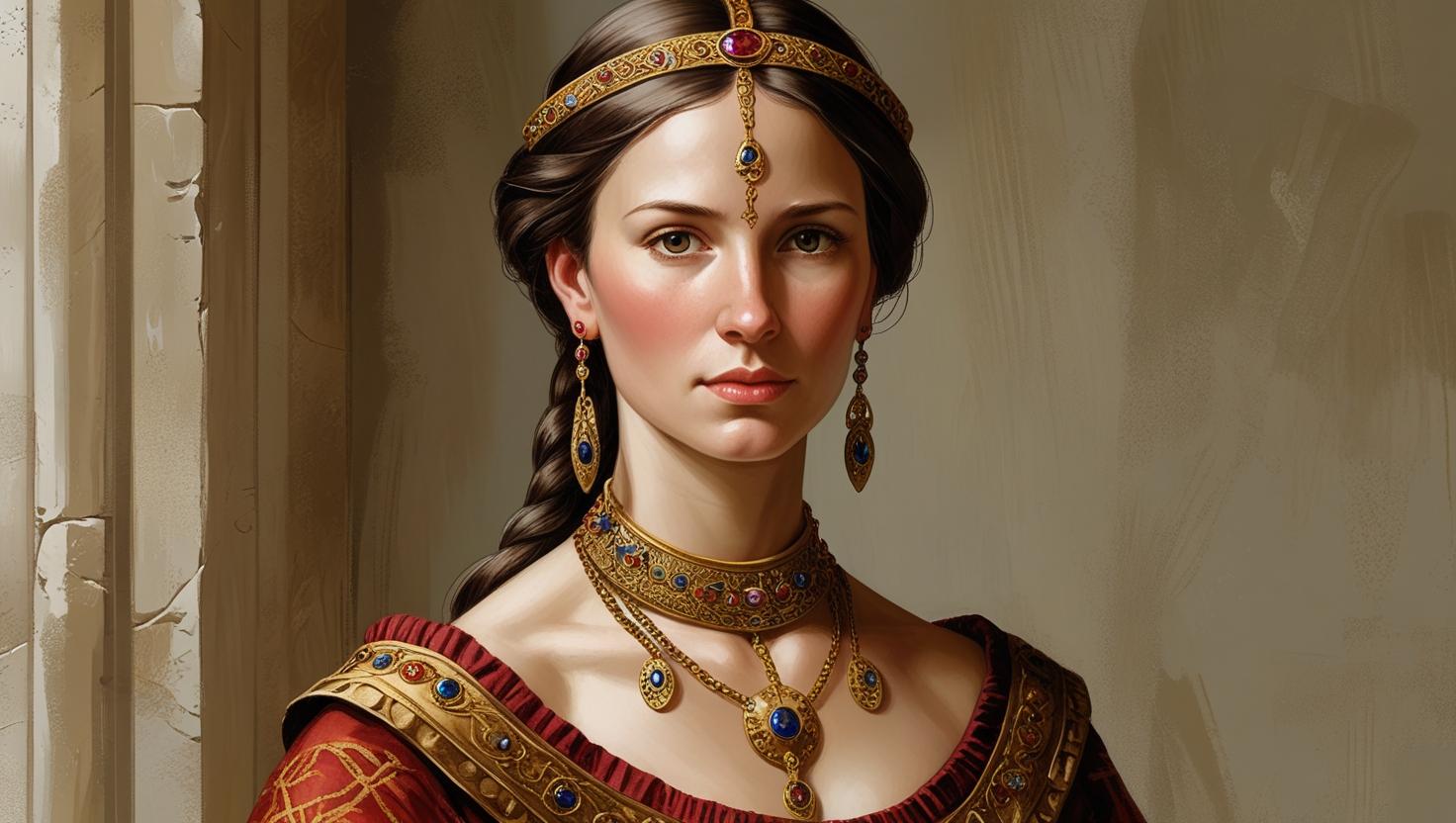
Lady Mildryth is the young leader of the settlement and its region granted to her by her father, King Cnebba of Mercia. She is named the cūning (‘king’), a title given to male and female leaders although she feels that she must impress her father that she is undoubtedly equal to men, in particular to her brothers who have also been granted small ‘kingdoms’. She feels that she is constantly being spied upon and judged by her father and therefore, although she’s a strong leader, needs to convey an image of strength and wisdom at all times: whether it may be in her dealing with problems within the settlement, or in her image in the Witan council where decisions are made. She’s annoyed with herself when she thinks that she has fallen short of the ideal she has set for herself.
Mildryth needs to be the final arbiter of disputes, the wise head who decides the fate of erring subjects, the judge of appropriate punishments for misdeeds, and the leader who forms the strategy in terms of relationships with neighbouring settlements and of the advisability of battle. She wants nothing more than a peaceful and flourishing future for her people and that is what she sees as her role, not as a warring, blood-thirsty despot or a conquering dictator. Success for Mildryth is the unity of a settled community with plentiful harvests, food stored for harsh winters, and the development of cultural activities, such as the scōp (poet story-teller of historic heroic tales) and the glæman (for music and singing). She follows the new Christian faith but accepts that many of her people still hold to the pagan beliefs of old, and tries to accommodate both views. It’s important for her to maintain harmony in the community. Like Anna, it’s a lot for her young shoulders to bear! Yet, she is still a ‘child of her time’ and when the real challenge comes in the form of an almost unbelievable reality, can she take it?
It is Mildryth’s name that Anna interprets from the runes on the seax hilt in Daughter of Mercia, and thus begins the connection between the two women across the centuries. Both of them experience odd ‘visions’ of each other’s life and times, as Anna starts to discover more about Mildryth’s challenges: her domineering father, her position as leader, and her relationship to the stranger who appears in her settlement, whom she names as Theowulf. In more ways than one, Mildryth challenges the conventions of her time and as a strong, brave and determined young woman she has much in common with Anna. But little do either of them realise how much more they have in common than personality alone. As Anna talks to her bed-bound mother she finds out about her father’s family history and it reveals a whole new dimension to her investigation into the seax, the burial, and to Mildryth herself.
I hope that Daughter of Mercia is a gripping page-turning read, but also that it is thought-provoking and leaves the reader wondering! As one of my reviewers said: ‘I couldn’t stop talking about it for days’.
If you want to read more about Lady Mildryth’s period of history, I have a series (Living with the Anglo Saxons) on my blog here at https://juliaibbotsonauthor.com

 juliaibbotsonauthor