Who were the early Anglo- Saxons?

early Celtic/Anglo-Saxon cross in a Midlands country churchyard, England

The Roman occupation of Britain during the early fifth century AD began to disperse when Honorius requested the return to Rome of the legions and administrators. The remaining Romans who had intermarried with Britons and Celts, along with the ‘native’ ethnic groups with existing settlements across the countryside of England, strengthened their fortifications against marauders from north of the border. It seems that they had already established organised groups or small ‘kingdoms’ (I won’t call them ‘tribes’ which seems to me to connote primitivism) which were then strengthened and extended, possibly with settlements joining into larger groupings.

These ‘pre-Anglo Saxon’ kingdoms developed gradually as Angle, Saxon and Jutish migrants from northern parts of Europe headed increasingly for Britain, perhaps for land, crops, climate. From around 450 AD, the Anglo-Saxon-Jute communities began to grow, bringing with them their heritage and culture.  

We have long perceived this time as mysterious, dangerous, even barbaric, as ‘invaders’ fought brutally to gain land from the indigenous peoples. The idea, long held, was that as the glory of Rome had gone from our island with the withdrawal of the legions, the British had no defence against the invaders, and that eventually the indigenous ‘tribes’ were overcome and suppressed by the brutal Anglo Saxons. One version has it that the threats to Celtic-British communities or small ‘kingdoms’ led Vortigern, High King of the southern Britons, to call upon Angles, Saxons and Jutes from overseas to help quash the Picts and Scots who threatened his land.

The threat from the north appears to be real but the actions of Vortigern, and indeed his very existence, is disputed. Brutish Anglo Saxon invaders, or migrants who, by and large, integrated relatively peacefully into Celtic-British society? What’s your view?

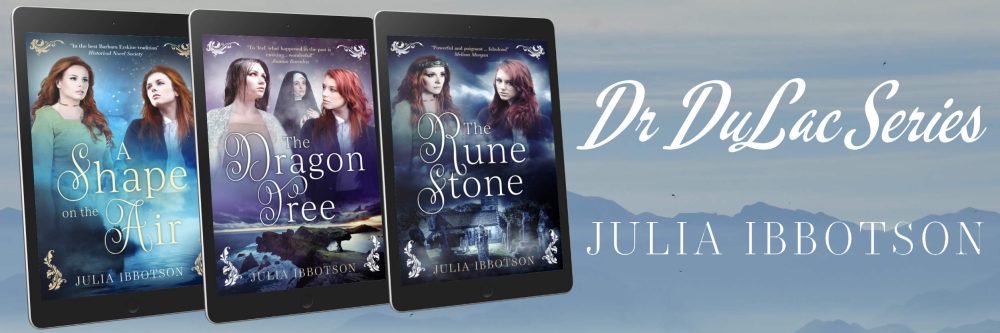
By the way, the photograph at the top of this post is the original inspiration for the third in the Dr DuLac series, The Rune Stone. It’s called locally, the Saxon cross, but it bears evidence of earlier Celtic influences and suggestions of a very early Celtic/Anglo-Saxon settlement can be detected in the village.

http://myBook.to/ASOTA

http://myBook.to/TDT

http://myBook.to/TRS

An author’s life: country walks

Forest Bathing

It’s not about getting naked and dousing yourself in freezing water in a cold and frosty wood! But it is about something that refreshes the soul and relaxes the body.

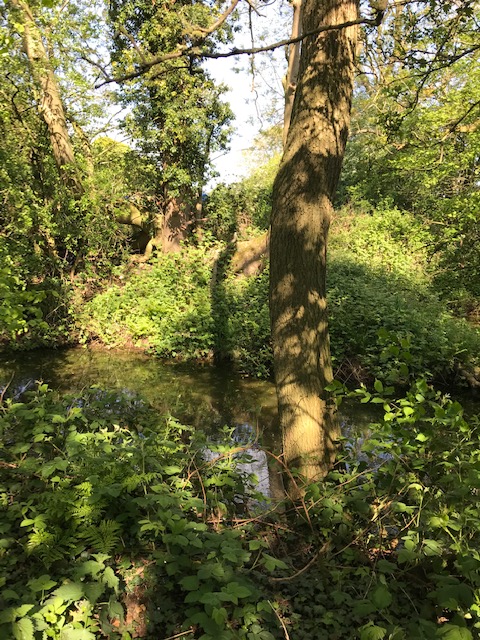
I’ve recently written blogs on ‘an author’s life’ that have been about seasonal recipes: autumn, winter – comfort cooking and baking in these difficult times we’re living in at the moment. I will return to recipes for spring and summer, but just now I want to extol the virtues of forest bathing. Well, it’s not as chilly or even horrifying as it sounds. It’s about mindful walking (or standing still) in the countryside, woodland preferably, but it could be any stretch of open natural landscape, a garden, a park. It’s about emptying your mind of stresses and immersing yourself in nature and marvelling at its treasures.

It’s about really looking as you walk, at the wild flowers, the trees, the flora and fauna. It’s about listening to the birdsong or the wind rustling the leaves. It’s about breathing in the smell of the earth, the scent of the blossoms. Being aware of things we often take for granted. And it doesn’t have to be about trekking off into the countryside. At the weekend I just stood for a few minutes in my garden and listened and watched nature unfolding around me. It was amazing how much I saw and heard, and even smelled that I might have missed had I not been really focused on that experience rather than on the tangle of my latest plot line. I saw blue tits vying for the bird feeder, blackbirds pecking on the grass, robins eyeing the scene from the rhododendrons. I heard wood pigeons calling from the treetops, the twitter of sparrows flocking, crows in the fields beyond, the croak of the pheasant in the woodlands around me. I heard a distant train and idly wondered if it was on its way to London, glad I wasn’t on it! I smelled the damp earth and wet fallen leaves, and the fresh scent of new leaves opening and buds awaiting their time. I heard the peace.Then I could return to my work with a renewed energy.

So how does this fit into my working day? How can I make time for it? As an author I’ve done many interviews in my time and the most popular question is: how I organise my day when I’m writing? Before lockdown and tiers and all that, I used to go swimming every morning, do about 30-40 lengths, then a spell in the gym, and home by about 9.30 to start work on my writing for the day. Now I can’t do that: gyms and pools are closed for the duration. So instead I try to do some physical work first thing. It might be in my ‘home gym’ (well, that’s flattering it a little; it’s an exercise bike, a power plate machine and dumb-bells in the spare bedroom). Or it might be a yoga session. Hopefully it’s both! Then I can get down to the business of writing. for a morning’s session.

So, where does the forest bathing come in? At lunchtime, if the weather permits (intermittent in England) I like to go for a walk to clear my head or to rehearse my next scenes. The country walks around our home, through fields and woods, are so beautiful. Even on the dullest day, there’s plenty to see and listen to. I like to stop and look, try to empty my mind of its cares, or a difficult plot hole, and concentrate on what’s around me. I try to take in the wild flowers by the wayside and listen to the bird song.

W H Davies wrote “What is this life, if, full of care, we have no time to stand and stare.” In these times, I think that’s even more relevant than before. So, if the weather is inclement for walking I might only be able to pop out into the garden to “stand and stare” for a few minutes. But even that is refreshing and relaxing for the rest of the day. And it’s amazing how much more energised and renewed you feel.

Then I’m ready to get back to the computer for the afternoon and remind myself of what my character was supposed to be doing …