So thrilled to be a Finalist in the Readers’ Book Awards for Book of the Year 2025! And then to be awarded a medal! Thank you so much, Coffee Pot Book Club. It’s like an early Christmas present.
Troubled medievalist Dr Anna Petersen and her old adversary, archaeologist Professor Matt Beacham, must unravel mysterious runes on an Anglo-Saxon seax found at a weird burial containing both 6th century and modern remains. My latest novel has garnered some really lovely readers’ comments:
“a beautifully crafted historical romance with a time travel twist”,
“richly layered with sensory detail”,
“brings both the past and the present timelines to life”,
“solidly researched and authentic”,
“a page turner”,
“engrossing”,
“beautifully crafted”,
“utterly compelling”,
“fast paced, a rivetting plot!”
and more …! Wow! Thank you so much, all my dedicated readers, old and new. What a great end to 2025. If you haven’t yet read it, it’s available at
In my latest timeslip/dual time novel, Daughter of Mercia, the seax is the starting point of the story and the mystery that Dr Anna Petersen and Prof Matt Beacham need to solve. It’s discovered at an archaeological dig site within a strange burial, and Anna, a specialist in early medieval runes, is called out by Prof Beacham to try to decipher those engraved on this seax.
A seax is a type of short sword or dagger used by Germanic peoples (Angles and Saxons) from around the 5th to the 11th centuries and it was used in a number of ways: as a tool, like a knife to cut food or other items domestically, or as a weapon, or indeed as a symbol of status. Anglo-Saxon society was hierarchical, and the higher classes would be awarded their own special seax as a mark of this.
In my book, the seax is central to my story, but not as a weapon so much as a signifier of status, and the mystery is around the mystifying runic message on its hilt (is it a curse?), and on the reason for its discovery in a weird burial that contains the remains of both a 6th century lady and a modern male.
A typical seax, as we can gather from archaeological evidence in burials (often as grave goods in higher status burials) usually had a single-edged, slightly curved blade varying in length from a few centimetres to 30+ centimetres, the latter especially in the earlier and much later period when used as a weapon. It would have a hilt, or handle, of wood, bone or maybe horn, decorated with complex patterns engraved on it, and often inscriptions. The early inscriptions may be runic and bear messages to the bravery or status of the owner, and may be named. Some seax finds have engravings on the blade as well as the hilt.
In my novel, as Anna surveys the discovered seax, she realises immediately that the finding is unusual and intriguing. She examines the seax, this one a smallish, narrow dagger, but she is surprised at the length of the blade in proportion to the hilt. She knows that this is quite unusual for the main Saxon period. She has the sense of something special, perhaps the possession of someone high, powerful. The seax is single-edged and there are markings on the blade and hilt.
There are braided bands engraved on the blade, its single edge and back are curved towards the tip which is nicely set at the centreline, and she knows that this is so far typical of early Saxon. But the hilt bears runes carved neatly and others seem strangely and rather crudely scratched into it. She realises it’s very early and she can identify a couple of runic symbols that are indicating early Angeln, not Saxon, possibly reflecting an early local dialect of 6th century Mercia, a most unusual find.
She begins to interpret the runic symbols and explains to her assistant: “The Anglo-Saxon variant is known as the ‘futhorc’, d’you remember? Or more accurately fuÞorc with the ‘thorn’ symbol for the ‘th’ sound. But in the rest of the text, as you rightly said, it’s using characters from the Latin alphabet, the Roman script, mixed together with the runes. That could indicate either a transition period or a deliberate purpose on the part of the scribe … runic characters would be gradually replaced by Latin letters, the Latin alphabet in the Roman script, as we know it now, to be more consistent, so different people from different regions could understand them better. And so the old runes eventually died out.”
The seax in my book bears the name ‘Mildryth’ on its hilt. In the 6th century timeline of my novel, Lady Mildryth is the leader or cūning(king – the title given to male and female leaders) of a settlement assigned to her by her father, King Cnebba of Mercia. During her Witan council held in the mead hall the seax is used as a symbol of power and status. The attending thegns bear gleaming shields, swords and seaxes: they “looked for all the world like an army before her, as was customary in the Witan.”
I can imagine that at the Witan, the cūning would sit at the centre of the long table on the dais. Before her would be laid a platter of honeyed cakes and goblets of wine and of mead. On either side would sit ealdormen and highest thegns and perhaps at the end of the table, the chief high ceorl, the official assistant. He would stand and raise his seax, perhaps knocking the hilt upon the table to call for the opening of the Witan council. A Witan sword or perhaps the seax would be held aloft and seaxes or swords clashed upon shields to signal approval of a decision in the council. A seax or Witan sword would be a sign of authority for the leader or other official to speak with no interruption. For Lady Mildryth it has a much graver significance.
In my novel, the mystery of the seax, of Lady Mildryth, and of the strange burial, is at last revealed and has surprising consequences for Dr Anna and Professor Matt.
Daughter of Mercia is a timeslip/dual time novel with two main protagonists in each timeline. The two main characters I’ve chosen to tell you about are Dr Anna Petersen (in the present day) and Lady Mildryth (in the 6th century), both complex characters who are the spring-boards for the conflict and action of the novel as their lives intertwine. There are also two male main protagonists: Professor Matt Beacham and Theowulf who are crucial to the plot.
Dr Anna Petersen is in her early 30s, an academic, a medievalist and expert in runology. She’s called out to an archaeological dig by her old adversary Professor Matt Beacham, an archaeologist, who wants her to help in interpreting strange runes on an ancient seax he has discovered in a weird burial on his dig site. This is the starting point of the story. However, Anna is a little hesitant as she has come across Matt previously during an inter-university session on WhatsApp, when she took an instant dislike to him, feeling that he was arrogant and unapproachable. But she’s really fascinated by the burial itself as well as the found artefacts, because there are two remains in the same burial site, one female and early medieval, and the other male and modern. She determines to go to the site to examine the unusual runes and hopefully find out more about the mysterious burial, although she’s haunted by the memory of the last dig she took part in, where a dreadful event took place.
Anna is essentially a strong character, clever, kind and caring, usually well able to stand up for herself in a man’s world, but feels that, in a moment of weakness, she has allowed herself to be taken advantage of, professionally and personally, by her erstwhile colleague, Tom. She is now struggling with being able to trust again and her life is now largely about self-preservation. She also holds a dark secret in her heart related to that experience and she finds it difficult to talk to anyone about it, other than her friend Susie. She wishes she could confide in her beloved mother, but as she is suffering from a terminal illness, Anna doesn’t want to worry her. As her father died long ago, Anna is her mother’s primary carer and the sole custodian of the historic family home and archives. It’s a lot for her young shoulders to bear! And it doesn’t help that Matt seems to blame her for the disappearance of their mutual colleague, Tom.
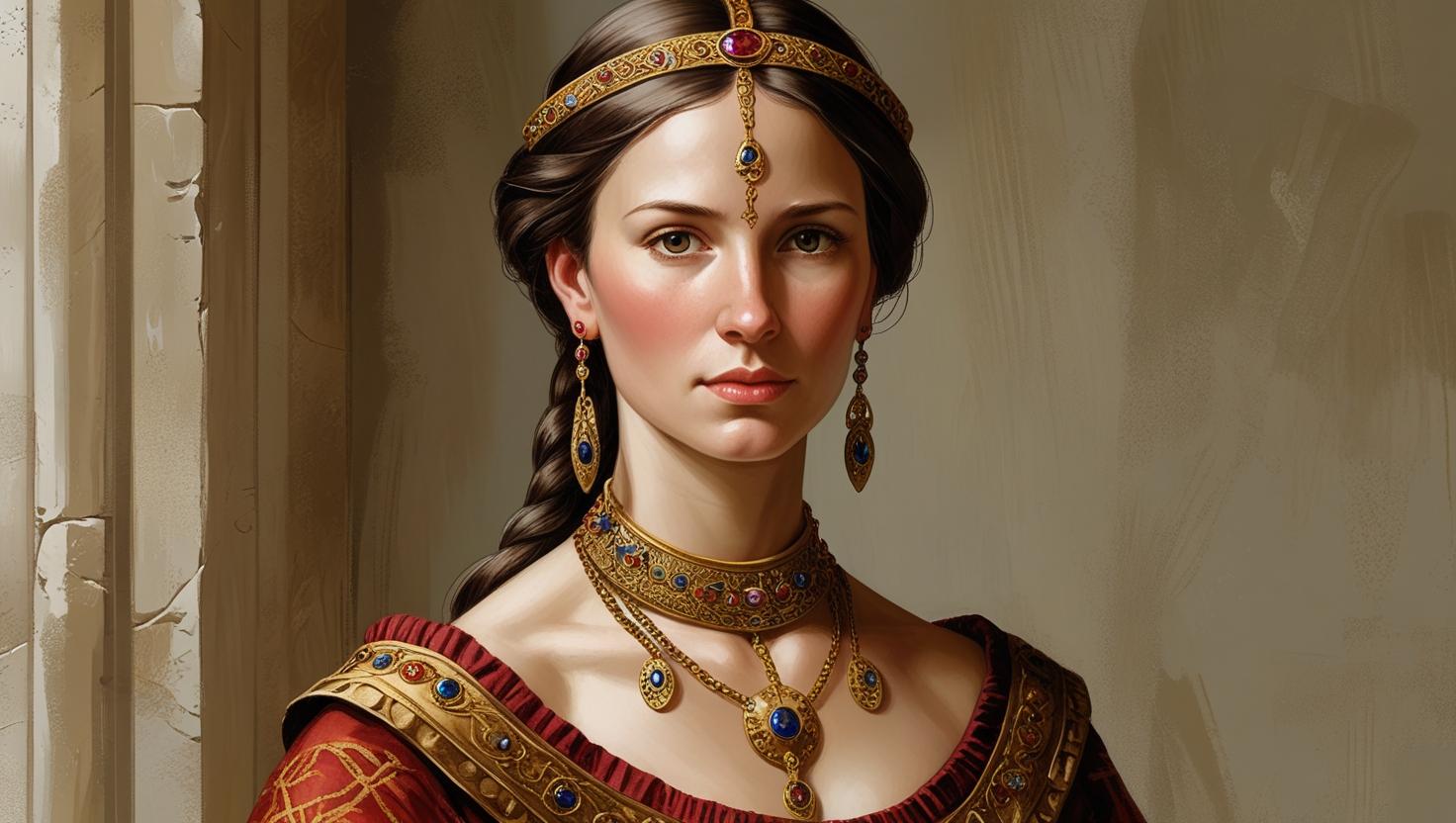
Lady Mildryth is the young leader of the settlement and its region granted to her by her father, King Cnebba of Mercia. She is named the cūning (‘king’), a title given to male and female leaders although she feels that she must impress her father that she is undoubtedly equal to men, in particular to her brothers who have also been granted small ‘kingdoms’. She feels that she is constantly being spied upon and judged by her father and therefore, although she’s a strong leader, needs to convey an image of strength and wisdom at all times: whether it may be in her dealing with problems within the settlement, or in her image in the Witan council where decisions are made. She’s annoyed with herself when she thinks that she has fallen short of the ideal she has set for herself.
Mildryth needs to be the final arbiter of disputes, the wise head who decides the fate of erring subjects, the judge of appropriate punishments for misdeeds, and the leader who forms the strategy in terms of relationships with neighbouring settlements and of the advisability of battle. She wants nothing more than a peaceful and flourishing future for her people and that is what she sees as her role, not as a warring, blood-thirsty despot or a conquering dictator. Success for Mildryth is the unity of a settled community with plentiful harvests, food stored for harsh winters, and the development of cultural activities, such as the scōp (poet story-teller of historic heroic tales) and the glæman (for music and singing). She follows the new Christian faith but accepts that many of her people still hold to the pagan beliefs of old, and tries to accommodate both views. It’s important for her to maintain harmony in the community. Like Anna, it’s a lot for her young shoulders to bear! Yet, she is still a ‘child of her time’ and when the real challenge comes in the form of an almost unbelievable reality, can she take it?
It is Mildryth’s name that Anna interprets from the runes on the seax hilt in Daughter of Mercia, and thus begins the connection between the two women across the centuries. Both of them experience odd ‘visions’ of each other’s life and times, as Anna starts to discover more about Mildryth’s challenges: her domineering father, her position as leader, and her relationship to the stranger who appears in her settlement, whom she names as Theowulf. In more ways than one, Mildryth challenges the conventions of her time and as a strong, brave and determined young woman she has much in common with Anna. But little do either of them realise how much more they have in common than personality alone. As Anna talks to her bed-bound mother she finds out about her father’s family history and it reveals a whole new dimension to her investigation into the seax, the burial, and to Mildryth herself.
I hope that Daughter of Mercia is a gripping page-turning read, but also that it is thought-provoking and leaves the reader wondering! As one of my reviewers said: ‘I couldn’t stop talking about it for days’.
If you want to read more about Lady Mildryth’s period of history, I have a series (Living with the Anglo Saxons) on my blog here at https://juliaibbotsonauthor.com
Exhausting, yes, but exciting! Today I’ve been on tour, from the comfort of my study and my laptop. No waiting around on chilly train stations, or driving with one eye on the satnav trying to get to an unfamiliar venue on time in a strange city, or wondering whether anyone will turn up to the event. No. Another of my virtual book tours, this one with Coffee Pot Book Club tours which specialises in historical novels. They’re at https://thecoffeepotbookclub.blogspot.com/ and the book bloggers are dedicated readers and authors. Do check it out as there are some fabulous sites out there enthusing about books set in all historical periods. I’ve been focusing on virtual book blog tours since covid struck and have continued ever since. So much more relaxing, cosy – and guaranteed audience! Check them all out.
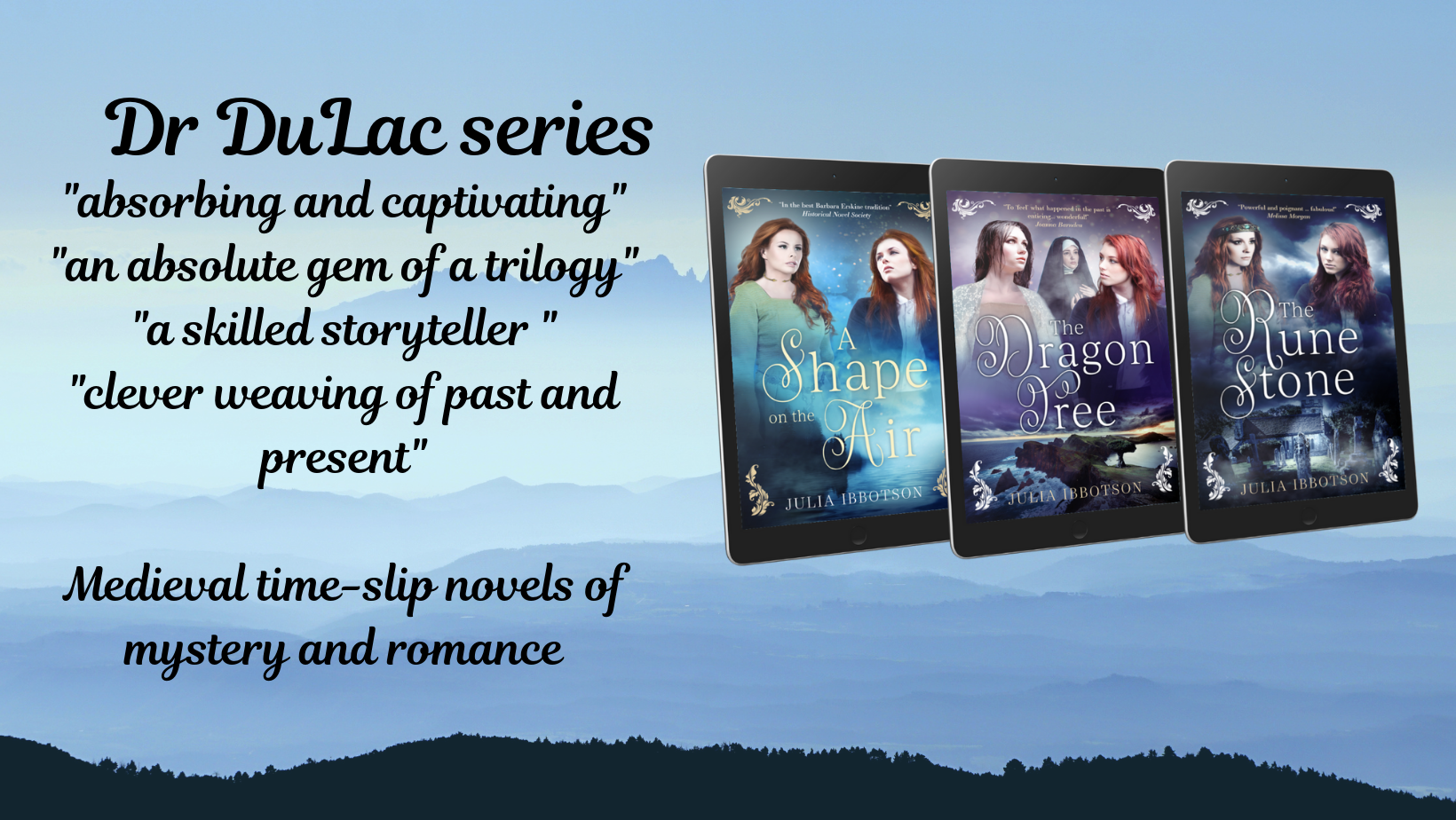
Today was all about the first of my Dr DuLac series (A Shape on the Air) at https://myBook.to/ASOTA a haunting early medieval (Anglo Saxon) timeslip of mystery and romance. It was a reminder of the start of my historical dual time novels as a prelude to further tours for my latest … so
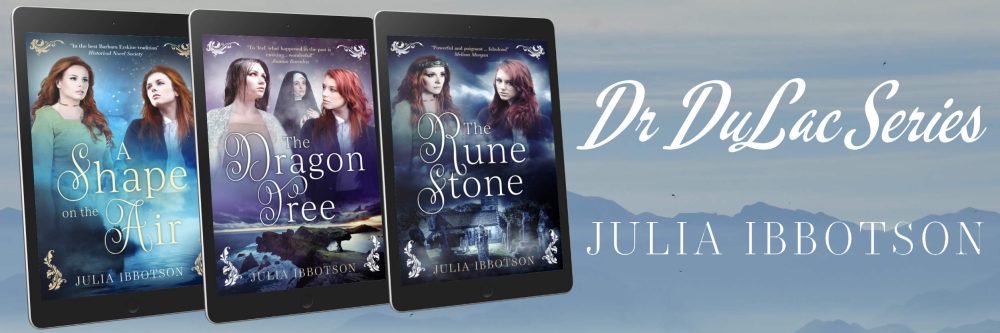
I’m thrilled to share with you the news of my sequels to A Shape on the Air! The next two feature the same main protagonists, Dr Viv DuLac and Rev Rory Netherbridge, so beloved of my readers. [ http://myBook.to/ASOTA ]
The Dragon Tree is set on the beautiful island of Madeira where Viv and Rory escape a personal tragedy, and it features a 14th century shipwrecked noblewoman and a 16th century rebellious nun. Can Viv solve the mystery of the historical link between them and find peace for herself and the island? [ http://myBook.to/TDT ]
The Rune Stone returns to England and features Viv and Rory’s quiet country churchyard where they discover an ancient rune stone with a mysterious runic inscription. We return also to the Anglo-Saxon Lady Vivianne and Sir Roland. Can Viv bring resolution to Lady Vivianne and harmony to Rory’s parish? [ http://myBook.to/TRS ]
It starts: We can see that throughout history and different cultures, society organises itself into groups and subgroups, usually based on religion or economic standing. In early Anglo-Saxon Britain there were social classes, in some ways similar to our modern understanding of hierarchies, in that there were ‘higher’ and ‘lower’ social classes, but in some ways they were very different from ours today. Anglo-Saxon and Celtic-British settlements were becoming increasingly expansive as the external threats grew. It made sense to band together for security and ‘manpower’. Settlements were headed by the chieftain, or ‘cūning’, from which we derive the word ‘king’. Even where the settlement was headed by a queen (rare!) she was still referred to as the ‘cūning’ in Anglo-Saxon. The word ‘cwene’ (queen) was usually only used for the wife of a king. The heir to the chieftaincy was the ‘ætheling’. Then there were the ‘ealdormen’ (elders) and the ‘thegns’, who were the nobles who were entitled to fight for the king at the head of troops and lead warriors into battle, and thus highly regarded. They often had their own family crests and banners which they fought under … [Read the rest at https://juliaibbotsonauthor.com/2021/06/21/living-with-the-anglo-saxons/ ] and follow the series ‘Living with the Anglo-Saxons’ sessions 2 -7 on food, houses, diet, etc.
I’ve been looking at Anglo-Saxon life in my series of blogs: Living with the Anglo-Saxons, covering social structures, houses, settlements, clothes, food and drink, feasting, health and medicine of the period, and the status of women. There is not a huge amount of hard evidence from archaeology or documents to reveal a great deal about the times. As a writer, I need to use my powers of assumption and imagination from what little we have.
But knowledge is increasing as the Anglo-Saxon period becomes more popular as a research area.
And in January 2021, there came news of a report of an archaeological dig in Overstone, Northamptonshire (further reported in in Current Archaeology 2.3.21, issue 373). The site was being excavated from 2019 by MOLA (Museum of London Archaeology) for a national house builder on the proposed site of a housing estate development. An Anglo-Saxon cemetery and settlement was beginning to be unearthed, revealing information about not only defence but everyday domestic life in an Anglo-Saxon settlement. Very rarely has a cemetery and settlement been unearthed at the same site in the same single excavation. The current tally of findings is:
154 burials (many grave goods reflecting status)
42 structures spread over the site (sunken-feature buildings and post-built structures)
at least 3,000 artefacts, including:
150 brooches
75 wrist clasps
15 chatelaines (decorative belt clasps)
2000 beads
25 spears
40 knives
15 shields
Various domestic artefacts such as ‘cosmetic kits’ including beautifully carved bone combs
Fragments of Anglo-Saxons textiles, which are very rarely preserved: these were buried next to metal objects causing them to become mineralised.
The human remains will tell us much about the Anglo-Saxon diet and health as well as their origins (very exciting in terms of information about migration!) and the artefacts will show us more about everyday life of the times.
I’m looking forward to further analysis of the finds and new learning on this fascinating historical period … The Anglo-Saxons!
Incidentally, evidence of Bronze Age burials in three round barrows were also found at the site, radiocarbon dated back as far as 2000BC.
Take a look at my Anglo-Saxon time-slip with mystery and romance at http://myBook.to/ASOTA
For more about, not just battles, fighting and kings, but about ordinary Anglo-Saxon life.
Anglo Saxon women: peace-weavers or shield-maidens?
I was interested to catch up with Kathleen Herbert’s excellent little book “Peace-Weavers and Shield Maidens” (2013, first published in 1997) on the image of women in early English society. She begins by commenting that people often tend to think of ‘English life’ as dating from 1066 whereas the first account of the ‘English’ (the ‘Anglii’, a Germanic race) was in Cornelius Tacitus’s ‘Germania’ in 98 AD and they worshipped a goddess, Nerthus (among other gods). As an aside, I’m not so sure about the 1066 bit – I would have said that people do tend to think of the Anglo Saxons from the 5th/6th centuries as the original ‘English’, despite the fact that before those migrants hit our shores the population comprised mainly Britons and Celts.
However, the stories and legends focusing on women, Herbert suggests, tend to fall into two archetypes: we might call them peace-weavers and shield-maidens. Herbert argues that women did fight and lead troops in early history, but were also literally and metaphorically peace-weavers, often through expedient marriages to form alliances with other kingdoms to avert potential strife. This seems to have been a widespread tactic to retain peace. Women might also be shield-maidens, literally or metaphorically as strategists in times of conflict. The two terms might well be interlinked and overlapping.
This is not to say that there weren’t violent battles for supremacy of a geographical region, that new kingdoms were not formed through victory in war. Of course, we have evidence of many battles leading to changes in power across different regions. But we also have evidence of deals and negotiation to co-exist.
Britain was composed of many small kingdoms, and kingdoms fought to take over other kingdoms and thus wield greater power over a larger region. But our theories of this time of great change are beginning to recognise the way that stable everyday life and the quest for peace were also significant. Hence, in my Dr DuLac Anglo-Saxon time-slip series (#1 A Shape on the Air and especially its #3 sequel, The Rune Stone, coming out soon), I have Lady Vivianne (early 6th century ‘cūning’ or king/queen) as “peace-weaver”, although her husband is a fighting warrior. Her elevation to respected status over other kingdoms, and especially that of the Icelings in The Rune Stone, is to all intents and purposes that of honorary “warrior”, a status almost always used for men who were normally the fighters, but this is as a result not only of her strategising but also of her peace-making abilities.
Yes, the term “peace-weaver” was often used for women who brought peace between two kingdoms through marriage, but it was also used for women who were more active on their own account in the forging of peace between kingdoms, as Lady Vivianne is depicted as undertaking in my series. These female leaders could be strategists, not necessarily fighters joining battle; they could be mainly working for the defence of their kingdom: active peace-makers. These were leaders whose warrior status was conferred not by fighting but by directing. Annie Whitehead (in Women of Power, 2020) refers to a saying about Ǣthelflaed, the10th century Lady of the Mercians and daughter of King Alfred, who strategized battles to take Derby, Leicester, York, that she was a “man in valour, a woman in name”. So, to all intents and purposes we can take Lady Vivianne as one who, like Ǣthelflaed, is a brave and courageous ruler; she is a true “cūning” and “peace-weaver”.
Read about Lady Vivianne and her present day counterpart Dr Viv DuLac in A Shape on the Air at http://myBook.to/ASOTA
In the last blog, I looked at what we know about food and drink in the Anglo-Saxon period. In many ways it might seem to us today that the Anglo-Saxon diet was healthy: no sugar, no fast foods, no ready meals, no additives, no processed foods – all the things dietitians and nutritionists are concerned about these days. So we tend to make assumptions based on our 21st century perspectives of a ‘healthy diet’ or ‘unhealthy foods’. We don’t have the Anglo-Saxon perspective on this!
The paucity of skeletal evidence from bio-archaeological or osteo-archaeological findings make it difficult to assess disease and chronic illnesses of the period. Our assumptions might be that there was lower incidence of obesity, heart disease, cancers because the diet consisted for many people of fresh fruit and vegetables, cereals, fresh meat and fish (although the latter two were more prevalent in the diet of the higher status Anglo-Saxons). And we might assume that this would lead to an increase in dental health, average height, increased recovery rate from infections. But without documentary or widespread archaeological evidence it’s hard to make generalisations.
We do know that there would have been a reliance on seasonal fresh produce because preservation was hard, which could be a problem if the harvest was affected by climate or major weather systems and this would be a vulnerability for Anglo-Saxon settlements. For example, there is evidence of a major volcanic eruption in the mid-530s which caused significant climate change, cold, darkness, ruined harvests. The resulting famine, hunger and starvation, would result in increased disease and deaths. We also know that there was a significant pandemic of bubonic plague in 541-2. Although this may not have been caused by diet it would certainly have ramifications on food production and availability.
The lack of food preservation techniques would exacerbate this vulnerability. There were few means to preserve perishable foodstuffs, apart from drying, smoking, and salting. Salt became such a precious commodity that some might be paid in salt, and social status was marked by how near or far you sat from the salt at feasts (‘above or below the salt’ was a common expression, being ‘below the salt’ indicating lower status). Foods such as fish and meat would be encased in salt for preservation, but it was also used to mask the taste of bad food.
Rotten perishable food was a significant health risk, but it was arguably not entirely widely recognised in this period. We think that it tended to be thought that it was the taste of bad food that was the problem, rather than the bacteria in rotting food. So, as a result, the Anglo-Saxons were keen to disguise the taste of bad food with salt, herbs and marinades. There would have been a significant risk of illness from food poisoning, from meat from cattle that were carriers of disease, and a weakening of strength when physical activity was paramount for the life of the community.
What about Anglo-Saxon medicine? Bald’s Leechbook (9th century) available in the British Library, and other documents, provide some interesting evidence of the way illness and disease was treated in this period. For example, various treatments were advised for wounds, throat infections, skin conditions and some for more serious diseases. Herbs were used for infusions, ointments, salves and poultices (eg an eye salve from garlic), and recipes are given for problems such as nettles for muscular pain. Eating animal liver is cited as a ‘cure for the plague’. The Leechbook suggests a concoction of leek, garlic, wine and bullock’s gall, which was reported in 2015 as a potion that could potentially kill methicillin-resistant staphylococcus aureus (MRSA)!
A final thought: there is emerging evidence from Anglo-Saxon sites in Cambridgeshire and Kent from the analysis of human skeletal remains for carbon and nitrogen isotopes that suggest diverse diets based on wealth and social status. For example, some studies suggest that higher status, wealthier Anglo-Saxons ate more meat and fish, and lower status people ate more vegetables, and possibly were, in some case, largely vegetarian. This is an ongoing analysis, but it would be interesting to know whether this related to the level of health.
PS Would you like to know more about life in the Anglo-Saxon period? My novel A Shape on the Air is set in 499 AD as Angle and Saxon tribes began to settle in Britain, although of course this happened over the course of several centuries.
Earlier in 2021 I was delighted to be asked to speak to the Leeds Symposium on Food, Drink and Health, which develops learning on these aspects of historical research. My session was, of course (!) on the Anglo-Saxon period. The following is based on some of the research I outlined in the session …
There was a rich mead hall culture in Anglo-Saxon times; the mead hall was where the community feasts were held and was a focal point in the village or settlement. ‘Mead’ was the common alcoholic drink made from honey, widely drunk, and especially at communal meals, thus the hall was named after it.
Literary evidence from the 7th or 8th century heroic poem Beowulf (the dating isn’t clear) indicates the riches of the hall and its decoration: ‘tapestries worked in gold glittered on the walls’, ‘eofor-līc scionon ofer hlēor-bergan: gehroden golde’ (‘boar-crests glittered above the helmets adorned with gold’), ‘māđm-æht’ (‘precious treasures’), ‘bēag-gyfa’ (the treasure-giver, or lord/leader/chieftain/king). The feasting and drinking is emphasised in the poem and many Anglo-Saxon words emphasise the importance of mead: ‘medo-ful’ (the mead cup), ‘medo-benc’ (the mead benc), ‘medu-drēam’ (revelry in mead-drinking and feasting).
There would be entertainment during the meal: a scōp would be employed, the poet/musician who entertained with ‘harp and voice’ (not a harp as we know it), and the poetry and story-telling would celebrate both traditional Christian and pagan heroic deeds and values. These narrative poems would honour and glorify the community and unify the society.
The mead hall was the centre of the pre-Anglo-Saxon and Anglo-Saxon village community. It was important as the Witan council, the decision-making meeting, was usually held in the mead hall and often before a feast. Wooden trestle tables were used for eating and could be dismantled or set up easily and quickly for council meetings. It was the focus of village life, eating and drinking together consolidated the stability of the community.
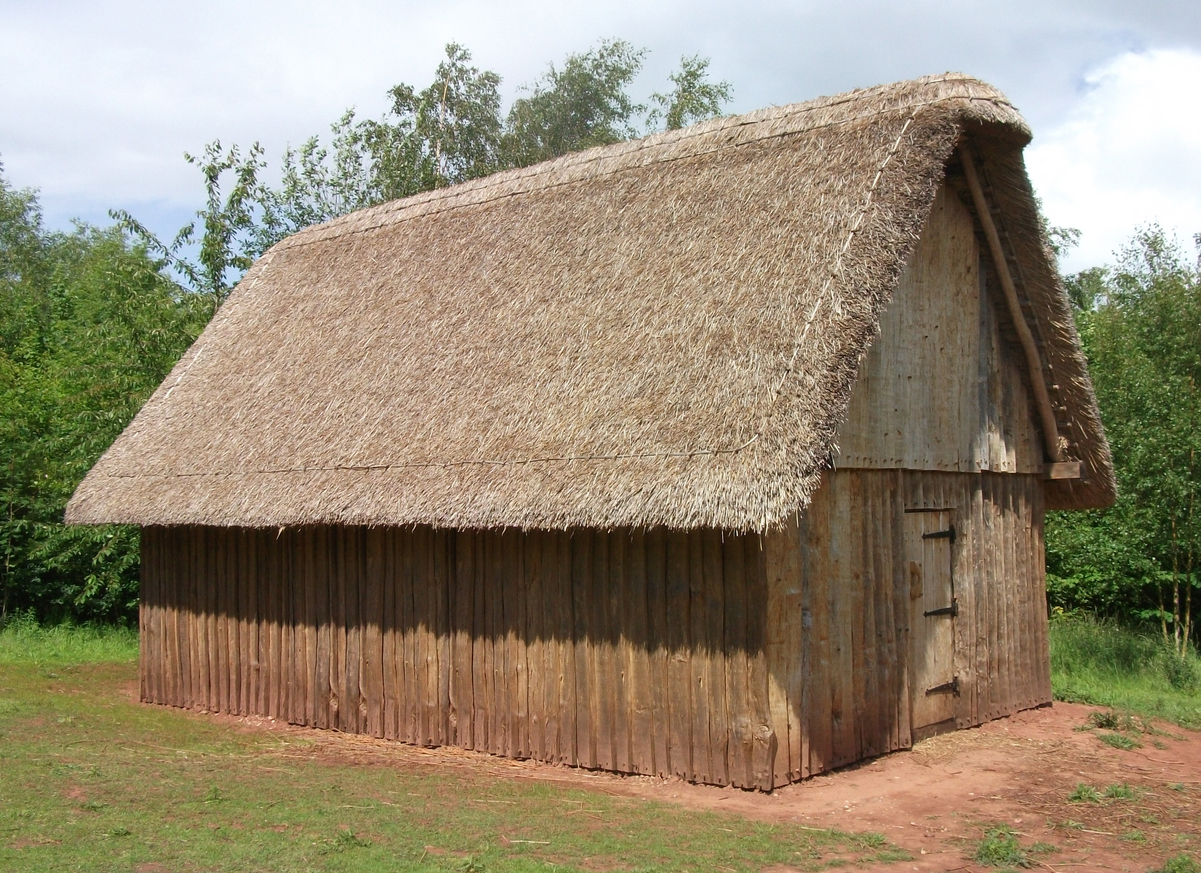
Reconstruction of Dark Ages Anglo-Saxon thatched wooden hall, built at Bishops Wood Centre, Worcestershire, England.
Feasts in the mead hall would be frequent in Anglo-Saxon times, and feast days for the whole community were usually held according to the journey of the moon: commemorating the full moon, new moon, winter solstice, summer solstice, etc.
But the general feasts were not necessarily for everyone in the village. There was a strict hierarchy. The serfs would serve at tables and they and the cooks would eat separately, but they still ate similarly to the thegns, ealdormen and ladies. The ceorls (lower class free men) might be included at table if they held a particular office. But the gebūrs (not in serfdom but keeper of ‘rented’ allotment of land) would not usually be included. The serfs, never.
There would be a ‘high table’ with the cūning/cyning (king/leader), ealdormen and high thegns. At right angles down the hall were the trestle tables for the other nobles. They would be used mainly at noon and evening for communal eating; evening meals in winter were by the light of flaming ‘torches’ in sconces on the wall and hanging cressets filled with oil. There would usually be a huge firepit in the middle of hall.
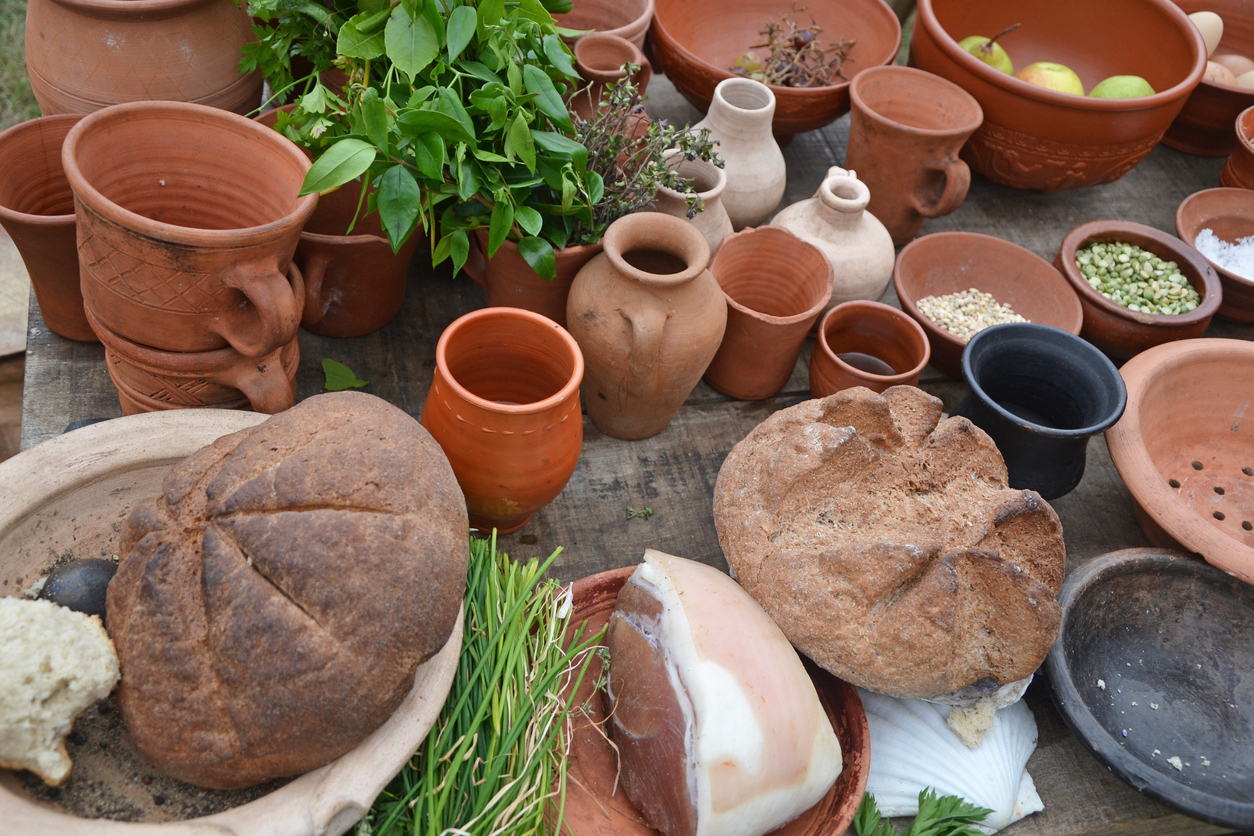
Whether in the mead hall or in their own houses, most Anglo-Saxons would use wooden bowls, platters and spoons. Everyone had their own knife (a seax or small version of a seax), worn in a leather pouch hanging from their belt at their waist. The wealthier people would have drinking horns for mead and perhaps even glass goblets for wine.
Although there is evidence that the Anglo-Saxons imported dates, figs, raisins and almonds, these would be for the wealthy. But berries and nuts from the hedgerows were plentiful for all. There is also evidence that agriculture changed from primarily arable to grazing land and there would be livestock for meat: eg chicken, cattle, pigs, sheep, ducks. There was often settlement provision and also individual families kept animals for food within their own living quarters: usually pigs and hens, often a cow. So dairy was accessible: milk, butter, cheese, eggs.
Settlements were usually sited near to rivers, for transport rather than drinking as the water was often contaminated (thus beer and ale were popular as well as mead) and fish would be caught, using simple nets, traps and line: trout, salmon, eels, perch, pike and even cockles, scallops and oysters.
On arable land and on the little patches of land next to individual houses, Anglo-Saxons would grow vegetables for the table: leeks (used for health remedies too), beans, peas, turnips, onions. Geburs might rent a patch of land for vegetables.
Arable farming produced spelt, wheat (for bread), rye, barley (for ale), oats (for bread, porridge, cakes). Ancient recipes indicate that bread could be made with ground wheat (flour) and water only, no salt (too precious!) or oil or yeast. Salt was extremely precious because it was the main source of food preservation and often used to mask the bad taste of rotting meat. Herbs were also used for this purpose as well as to flavour and tenderise, for marinades, etc.
There was no sugar, so honey was widely used to sweeten food and drinks (hence honeyed mead). Honeyed bread was a delicacy!
NB further reading:
Ann Hagen (2010) Anglo-Saxon Food and Drink: production, processing and consumption (Anglo-Saxon Books)
Debby Banham (2004) Food and Drink in Anglo-Saxon England (The History Press)
In the next blog, I’ll be looking at how healthy/unhealthy the Anglo-Saxon diet seems to be …
You might like to read more about those times, a fascinating period of English history, in my novel A Shape on the Air. It’s an Anglo-Saxon time-slip mystery available on Amazon at
West Stow Anglos Saxon Village in Suffolk, East Anglia in England is a fascinating recreation of an Anglo Saxon Village.
The Anglo-Saxon village or settlement consisted of wooden thatched huts, ceorls’ houses, and larger timber halls for the thegns, usually single storey and all grouped around a central mead hall and large chieftain’s hall. In many cases, these could be combined into one large ‘long hall’. The mead hall served as the venue for feasting with huge celebratory banquets, although generally restricted to the wealthy thegns and ealdormen, and as a place for meetings, sometimes referred to as ‘moot halls’ , the moot being the council meeting or gathering where the higher rungs of society met to discuss the settlement’s important matters of defence, judgement and punishment, tythes or food provisions. A large mead hall might contain rooms for the family of the chieftain (or cūning). As the period progressed halls became bigger and more splendidly furbished to signal the chieftain’s power and status. Recent archaeological work has uncovered huge halls for such purposes.
Even the early Anglo-Saxon villages would be fortified against raiders and would have a band of warriors ready to fight for their society’s protection and security. There would be stables for horses, granaries for storing precious grain, and along the dirt roads would be clusters of tradesmen’s workshops often with wooden shelves or counters outside, displaying their wares: the wood-worker, the metal-worker, the communal bakery, the baker, the weaver, the pottery kiln, and so on. When coinage was scarce, trade was often through exchange or barter of goods or services.
Thatched single-room huts of wattle and daub or wood comprised much of the settlement and these were often flanked by small plots allowed for vegetable growing for the family’s own use (the precursor of our gardens) and middens for human sewage – which proved invaluable for manure to fertilise the vegetable plot!
Gradually the Anglo-Saxons moved away from their pagan heritage and by the 6th century were embracing Christianity, partly through missionaries from Rome or Celtic lands, and simple timber churches could be found in settlements, often adopting pagan sites such as burial mounds, sacred wells or standing stones as their locations.
By the later period, the 9th to the 10th centuries, we might expect to see the wide development of village churches, still often timber built which didn’t survive the ages, but which later developed in size, architecture, building materials and adornments as the period continued. Many village churches of today bear evidence of their Saxon and Celtic origins, perhaps where they were built in stone (rare) or reveal a Saxon cross in the churchyard.
NEXT TIME: Anglo-Saxon diet and health …
For more about Anglo-Saxon life, my Anglo-Saxon/present day time-slip with mystery and a touch of romance can be found at:









 juliaibbotsonauthor