Exhausting, yes, but exciting! Today I’ve been on tour, from the comfort of my study and my laptop. No waiting around on chilly train stations, or driving with one eye on the satnav trying to get to an unfamiliar venue on time in a strange city, or wondering whether anyone will turn up to the event. No. Another of my virtual book tours, this one with Coffee Pot Book Club tours which specialises in historical novels. They’re at https://thecoffeepotbookclub.blogspot.com/ and the book bloggers are dedicated readers and authors. Do check it out as there are some fabulous sites out there enthusing about books set in all historical periods. I’ve been focusing on virtual book blog tours since covid struck and have continued ever since. So much more relaxing, cosy – and guaranteed audience! Check them all out.
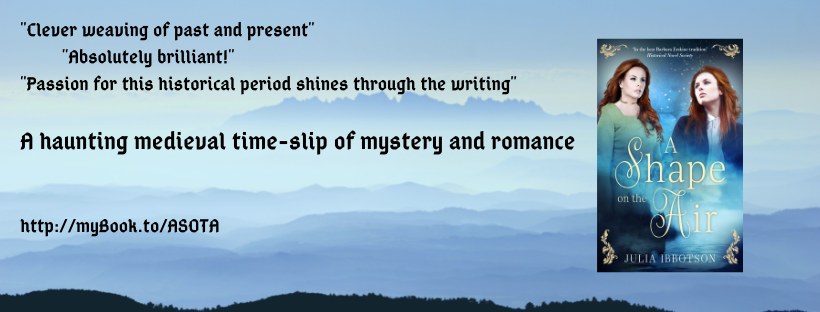
Today was all about the first of my Dr DuLac series (A Shape on the Air) at https://myBook.to/ASOTA a haunting early medieval (Anglo Saxon) timeslip of mystery and romance. It was a reminder of the start of my historical dual time novels as a prelude to further tours for my latest … so
Finally, after many delays, my latest haunting early medieval dual time mystery romance is out there in the world! The blurb:
Echoes of the past resonate across the centuries as Dr Anna Petersen, a medievalist and runologist, is struggling with past trauma and allowing herself to trust again. When archaeologist (and Anna’s old adversary) Professor Matt Beacham unearths a 6th century seax with a mysterious runic inscription, and reluctantly approaches Anna for help, a chain of events bring the past firmly back into her present. And why does the burial site also contain two sets of bones, one 6th century and the other modern?
As the past and present intermingle alarmingly, Anna and Matt need to work together to solve the mystery of the seax runes and the seemingly impossible burial, and to discover the truth about the past. Tensions rise and sparks fly between Anna and Matt. But how is 6th century Lady Mildryth of Mercia connected to Anna? Can they both be the Daughter of Mercia?
For fans of Barbara Erskine, Elena Collins, Pamela Hartshorne, Susanna Kearsley and Christina Courtenay.
My genre for the past few years has been (and still is, really!) decidedly historical fiction, mainly early medieval time-slip, Anglo-Saxon in particular. But my earlier novels were more modern (twentieth century). I’m told that ‘history’ is prior to 50 years ago, so I guess they too are within the historical novel genre. Drumbeats opens in 1965.
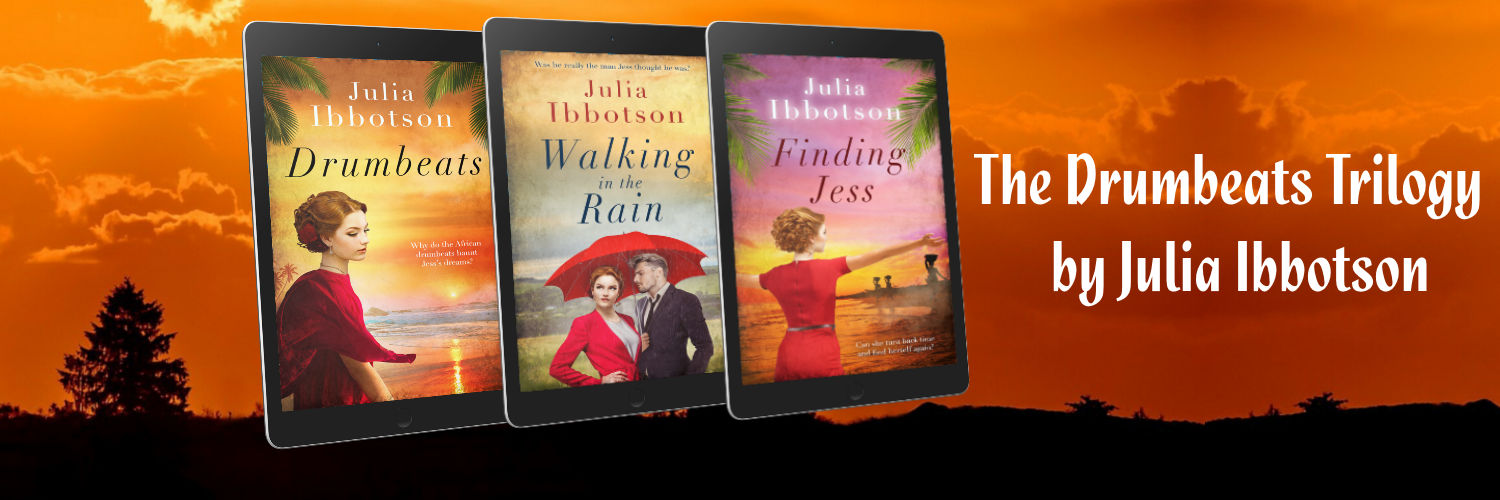
My news is that the Drumbeats Trilogy has just been re-published and re-released with a new publisher and with lovely new covers and some minor revisions. I hope you like the new covers; I think they’re more eye-catching than the previous ones from my last publisher. The trilogy starts in the mid-1960s with Drumbeats when 18 year old Jess goes off to Ghana, West Africa, on her gap year, to teach and nurse in the bush villages. It’s a year of joy and tragedy, loss and discovery. The series continues with Walking in the Rain through Jess’s life of uneasy compromises in the 1970s to 80s, to Finding Jess in the early 1990s and finally sees her return to Ghana and her second chances of happiness. The trilogy is a feel-good exploration of one woman’s rise above adversity and the triumph of hope and love.
I’m on book tours with the new editions through the autumn – do look out for the flash discounts to celebrate the new covers and the tours!
I seem to be on a mission to revamp my remaining books too, having moved to a new publisher, so The Old Rectory and my children’s book S.C.A.R.S will also be flaunting new covers and new editions soon. The Old Rectory is the story of rescuing an old early Victorian house and the exploration of the historical food and drink that would have been prepared in its kitchen, while S.C.A.R.S is a fantasy time-slip tale based on medieval literature.
And currently, I’m also working on a new series of Anglo-Saxon time-slip/dual time novels set in Mercia, with a new protagonist, a specialist in interpreting runes, who joins up with an archaeologist to solve strange mysteries of the past.
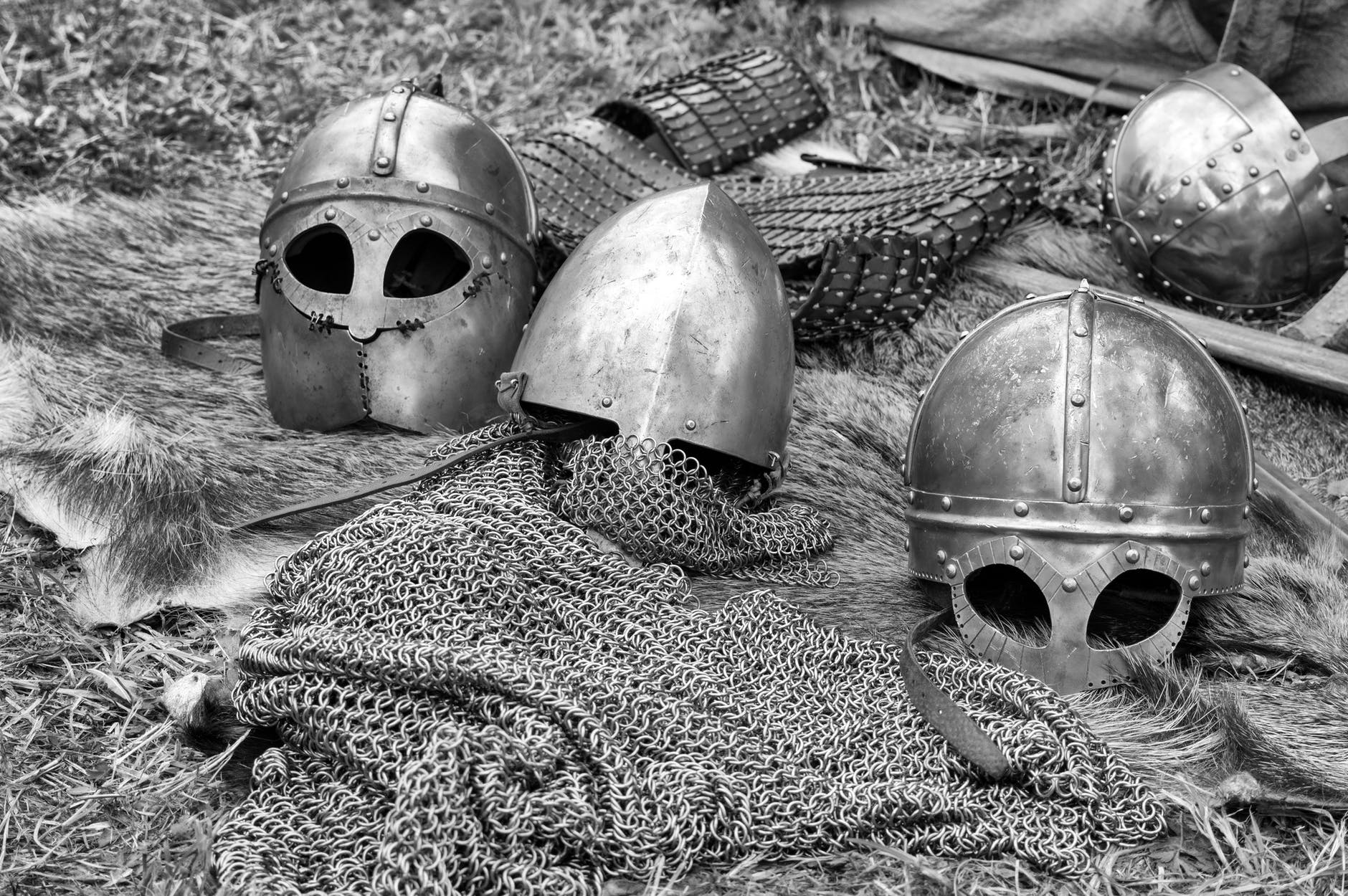
Was the early Anglo Saxon period ‘primitive’? part 1: the legacy of the Romans
So, before the advent of the Angles, Saxons and Jutes from the European continent, Britain was now embarking on a new age, alone without its Roman protection and orderliness. But was it ’dark’ because it was primitive, ungoverned, lacking in culture and sensitivities?
What happened to the culture and yes, even spirituality of Roman times, and of pre-Roman Britain? Religion, beliefs, gods and their effect on mankind were strong influences on Roman life, demonstrated in their art and craftwork; icons and imagery of beliefs or superstitions (call them what you will) were rife. Did it all disappear in the early to mid-fifth century AD?
Or was Britain ‘dark’ because we simply don’t know to any degree of certainty, because of the paucity of archaeological or documentary evidence, what it was like? So, what if all that did not crumble and disappear from everyday life after the Romans left Britain? After all, why should it all be forgotten in the disappearing flash of Roman swords from our shores? Wouldn’t the British still retain something of their Roman past and indeed of their pre-Roman ways?
Today, we still have our Roman roads, our sites of Roman towns and villas, some have been adapted, some in ruins. Were these splendid constructions simply abandoned in the early fifth century AD and left to rot as the occupying forces left, as we have long believed?
Was the early Anglo Saxon period ‘primitive’? part 2: a mix of cultures
I argue that during the long Roman occupation, rather than two opposing and alien cultures, there would have been a mingling, intermarriage between the ‘invaders and the ‘native’ Britons, Celts, and other groups, that these resulting communities would have perhaps settled, compromised and accommodated each other’s ways.
After the withdrawal of the Roman legions and administrators, the people, the so-called ‘abandoned’ Britons and remaining Romans who had established homes and families after inter-marriage, would have used Roman effects in their subsequent buildings and settlements, and likewise would have retained aspects of their cultural heritage that were important to them, their craftwork, their art, their beliefs.
Granted, there would have been challenges and tensions between different cultures which by the late fifth century would have comprised a complex mix deriving from native groups (Celts, Britons), remaining Romans, occupying warring migrants in the northern territories (Picts, Scots), and new migrants (Saxons, Angles, Jutes). Many Celtic-speaking Britons would have adopted the Christian religion of their forebears and of many converted Romans, yet with the sweep of the Saxons northwards after the Roman withdrawal, paganism returned before a more widespread Christianisation in 597 AD with Pope Gregory’s emissary St Augustine.
Archaeological evidence, including artefacts, indicate that there was a rich culture here which embraced imports from trading across the world: rich religious icons, amphorae for storing wine, red Samian tablewear, glass, gold, jewellery for example, as well as wall hangings, imported olive oil, wine and foodstuffs. Gradually the mix of cultures brought new ideas, skills and an increasing trade to create a wealthy and sophisticated culture in 5th to 6th century England.
Read more of this fascinating period in A Shape on the Air and its forthcoming sequels. Go to …
A Shape on the Air: an early Anglo-Saxon time-slip mystery. “a wealth of historical research”, “fascinating historical period”, “the atmosphere evoked is fabulous, “I just couldn’t put it down”, “the women in this story are both brilliant and strong characters”, “Both the story-lines (in the time-slip) are equally compelling … an amazingly delightful and fast-paced read!”
Where did you get the inspiration for the book/series?
To be honest, my ideas come into my mind pretty much unbidden. I’m constantly curious about people, relationships, history, things around me, and I read and research a great deal, but of course it takes a lot of imagination to develop the ideas into a viable story. In the first of the Dr DuLac series, A Shape on the Air, I wanted Dr Viv to have a troubled relationship, to have a traumatic experience that would lead to a time-slip and a deep connection to another woman in the distant past. The idea for A Shape on the Air came from my interest in early medieval history which was my first research field, the post-Roman, early Anglo Saxon era, commonly called the Dark Ages. I’d been reading recent research, mainly archaeological stuff, that supported my view that it wasn’t so ‘dark’ in the sense of barbaric fighting, invasions, and brutality, but that it was actually marked by richness and diversity. I am also very interested in the concept of time and I’d wanted to write a time-slip for ages – but then you have to think, how could it actually happen to normal people in their everyday lives?
Do you write using pen and paper or on a computer?
I write on my computer so that I can easily edit as I go, but my research notes and planning notes and graphs are usually the old pen and paper, and post-its everywhere. I have a pinboard beside my desk and I fill it for the novel I’m currently writing, with pictures from the history I’m writing about and inspiration for characters. For example my inspiration for Dr Viv is a pic of Rachel Weiss (looking elegant and thoughtful) and Rev Rory is James Norton in the role of Rev Sidney Chambers (gorgeous!). And there are lots of pics of early medieval banqueting halls (mead halls), Anglo Saxon warriors and ladies, a dark ancient mere, and the prototype of Viv’s apartment which is actually somewhere I once lived just outside Oxford.
Who is your favourite character out of your stories and why?
My favourite character is always the one I’m writing at the moment! In A Shape on the Air, I loved Dr Viv/Lady Vivianne (traumatised by Pete’s betrayal/Sir Pelleas’s brutality) and Rev Rory/Sir Roland (a hunk but also sensitive and caring), but I was especially fond of Tilly/Tilda who is very sweet and such fun I really enjoyed writing her.
If you were a character in your story, which would you like to be?
Warrior medieval woman with bow hunting in mystery forest
I think it would have to be Lady Vivianne because I guess 499 AD would have been an exciting time to live in, caught between the Roman world and before the Anglo Saxon era was properly established. It was a time of change and uncertainty but also an opportunity for making your mark. Women were respected as part of the leadership of communities and Lady Vivianne holds her own in difficult circumstances. And I think she’s a good person with the interests of her community at heart. Although she was brought up as the daughter of the king/chieftain, she is not arrogant or entitled; she wants a more equal world.
How and why did you choose the names for your main characters?
I started with Lady Vivianne. The names Vivianne, Nimue, Nivian etc are the names associated with the Lady of the Lake in Arthurian legend (which is important in the story) and I had to choose a name that could translate to a modern equivalent, hence Dr Viv. Likewise Sir Roland which was a common name in English and French medieval legend, and then Rory came from that. It was the same for all the other characters in the two time periods. I deliberately didn’t choose totally authentic pre-Anglo Saxon/Britonic names because that wouldn’t have worked with the dual times and additionally, they would have been more difficult to read! It was a conscious decision to approximate a modernisation of historic names. After all, I’m writing characters who are from different ‘tribes’: Briton, Celtic, Roman, Angles, Saxons!
What are your future plans as an author?
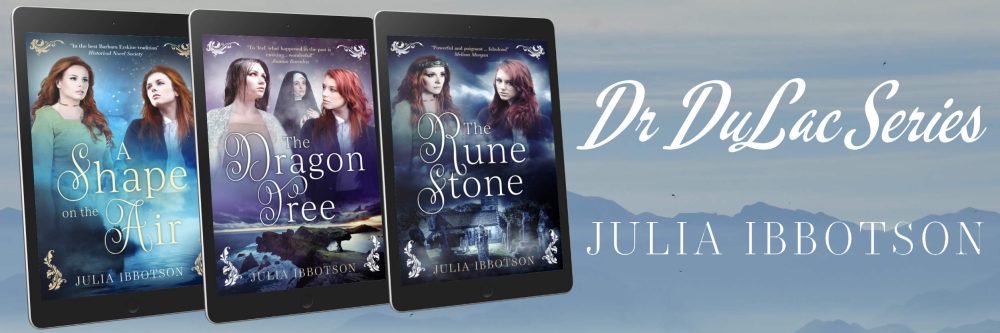
I’ve written the sequel to A Shape on the Air and it’s set in Madeira. It’s provisionally called The Dragon Tree. Again Viv has a traumatic experience, so you can guess what that leads to! It is a time-slip/dual time story and goes back to the 14th and 16th centuries on the island which were fascinating times. I’ve also written the third in the Dr DuLac series, The Rune Stone, which returns to my favourite early medieval mystery. It involved a lot of research into ancient runes which was fascinating. Moving house in between lockdowns created a hiatus for me (so much to do and hard to concentrate) but I’m now starting a new novel, Daughter of Mercia which has cross-overs to the Dr DuLac series. For the moment, I want to stick with early medieval/Anglo-Saxon time-slip mysteries, as this has become my identified author brand. But who knows …?
The brand new Drumbeats Trilogy Omnibus edition is just out in ebook from my publisher Endeavour, and it’s available on Amazon right now – all three novels together in one place for only £5.99. The trilogy overall is a saga about love, betrayal and second chances – and one woman’s search for the strength to rise above adversity.
It’s the story of Jess and we first meet her in Drumbeats as an 18 year old in 1965 on a gap year in Ghana (West Africa) where she’s teaching and nursing in the bush. She goes with a naive mission to make a difference in the world, but faces tragedy, civil war, and a new romance – with the echoes of the village drumbeats warning her of something … but what?
The next, Walking in the Rain, follows Jess back to England, and marriage, motherhood, and disaster … and the drumbeats continue to pervade her dreams.
The final book, Finding Jess, published singly just last August, sees Jess coping with betrayals, family problems and desperately trying to juggle a job at the same time … and finally returning to Ghana to try to ‘find herself’ again as an individual. Will she succeed? And what are the drumbeats trying to tell her throughout it all?
Some of the wonderful reviews I’ve already received: “scenes of raw emotion”, “an emotional roller-coaster”, “a heart-warming read, wonderfully written, compelling, warm and uplifting”, “feel the searing heat of Ghana burning right off the pages”, “a powerful story”, “so evocative, it transported me to a different time, different place; I couldn’t put it down”.
There’s a major launch of the omnibus edition and a book blog tour with Rachel’s Random Resources from January 26 to February 8. The tour’s full and all ‘sold out’ for 42 stops. So, I’m busy preparing content for the tour: guest posts, Q&As, selecting extracts …
How do you select extracts from all three books without giving away ‘spoilers’ for the plots? Goodness, it’s difficult! I’ve worked on several attempts. One host wants an extract from just one of the books, OK, but I have to select very carefully as it’s the second book in the series. Two of the hosts want extracts from all three and a few words about the context of each one. Fair enough, but what a challenge. All three hosts need a selection of different extracts, because I guess many blog readers will be following the whole tour and obviously don’t want to be reading the same stuff over and over! I wouldn’t! Should I take a different ‘theme’ for each, maybe? But even so, how do I do it, especially the context statements, without giving away too much of what happens to Jess through three whole novels and 30 years?! Well, I’ve given you enough above! Yikes.
Any advice, gratefully received! In the meantime, I’ll be ensconced in my study for the duration.
Get those brain cells working overtime, Julia. I WILL get there … eventually! In the meantime, I’ll pop up the official book tour banner from my tour organiser shortly. Six guest posts and Q&As drafted … nearly there …





 juliaibbotsonauthor