
In my latest timeslip/dual time novel, Daughter of Mercia, the seax is the starting point of the story and the mystery that Dr Anna Petersen and Prof Matt Beacham need to solve. It’s discovered at an archaeological dig site within a strange burial, and Anna, a specialist in early medieval runes, is called out by Prof Beacham to try to decipher those engraved on this seax.
A seax is a type of short sword or dagger used by Germanic peoples (Angles and Saxons) from around the 5th to the 11th centuries and it was used in a number of ways: as a tool, like a knife to cut food or other items domestically, or as a weapon, or indeed as a symbol of status. Anglo-Saxon society was hierarchical, and the higher classes would be awarded their own special seax as a mark of this.
In my book, the seax is central to my story, but not as a weapon so much as a signifier of status, and the mystery is around the mystifying runic message on its hilt (is it a curse?), and on the reason for its discovery in a weird burial that contains the remains of both a 6th century lady and a modern male.
A typical seax, as we can gather from archaeological evidence in burials (often as grave goods in higher status burials) usually had a single-edged, slightly curved blade varying in length from a few centimetres to 30+ centimetres, the latter especially in the earlier and much later period when used as a weapon. It would have a hilt, or handle, of wood, bone or maybe horn, decorated with complex patterns engraved on it, and often inscriptions. The early inscriptions may be runic and bear messages to the bravery or status of the owner, and may be named. Some seax finds have engravings on the blade as well as the hilt.
In my novel, as Anna surveys the discovered seax, she realises immediately that the finding is unusual and intriguing. She examines the seax, this one a smallish, narrow dagger, but she is surprised at the length of the blade in proportion to the hilt. She knows that this is quite unusual for the main Saxon period. She has the sense of something special, perhaps the possession of someone high, powerful. The seax is single-edged and there are markings on the blade and hilt.
There are braided bands engraved on the blade, its single edge and back are curved towards the tip which is nicely set at the centreline, and she knows that this is so far typical of early Saxon. But the hilt bears runes carved neatly and others seem strangely and rather crudely scratched into it. She realises it’s very early and she can identify a couple of runic symbols that are indicating early Angeln, not Saxon, possibly reflecting an early local dialect of 6th century Mercia, a most unusual find.
She begins to interpret the runic symbols and explains to her assistant: “The Anglo-Saxon variant is known as the ‘futhorc’, d’you remember? Or more accurately fuÞorc with the ‘thorn’ symbol for the ‘th’ sound. But in the rest of the text, as you rightly said, it’s using characters from the Latin alphabet, the Roman script, mixed together with the runes. That could indicate either a transition period or a deliberate purpose on the part of the scribe … runic characters would be gradually replaced by Latin letters, the Latin alphabet in the Roman script, as we know it now, to be more consistent, so different people from different regions could understand them better. And so the old runes eventually died out.”
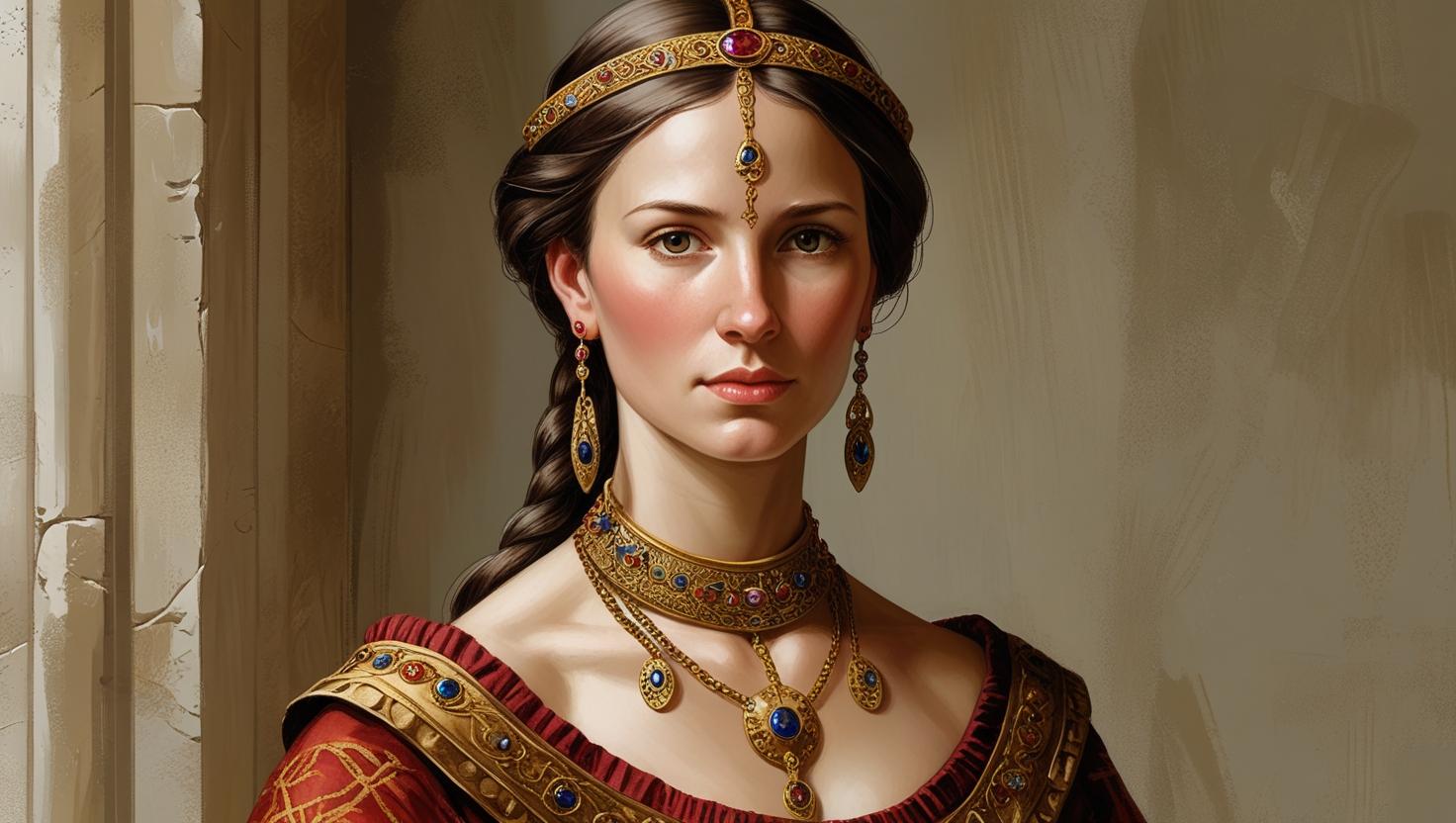
The seax in my book bears the name ‘Mildryth’ on its hilt. In the 6th century timeline of my novel, Lady Mildryth is the leader or cūning (king – the title given to male and female leaders) of a settlement assigned to her by her father, King Cnebba of Mercia. During her Witan council held in the mead hall the seax is used as a symbol of power and status. The attending thegns bear gleaming shields, swords and seaxes: they “looked for all the world like an army before her, as was customary in the Witan.”
I can imagine that at the Witan, the cūning would sit at the centre of the long table on the dais. Before her would be laid a platter of honeyed cakes and goblets of wine and of mead. On either side would sit ealdormen and highest thegns and perhaps at the end of the table, the chief high ceorl, the official assistant. He would stand and raise his seax, perhaps knocking the hilt upon the table to call for the opening of the Witan council. A Witan sword or perhaps the seax would be held aloft and seaxes or swords clashed upon shields to signal approval of a decision in the council. A seax or Witan sword would be a sign of authority for the leader or other official to speak with no interruption. For Lady Mildryth it has a much graver significance.
In my novel, the mystery of the seax, of Lady Mildryth, and of the strange burial, is at last revealed and has surprising consequences for Dr Anna and Professor Matt.
Read about the mystery in Daughter of Mercia at https://myBook.to/DOMercia









 juliaibbotsonauthor