The mystery of the Anglo-Saxon seax and the strange runes on its hilt

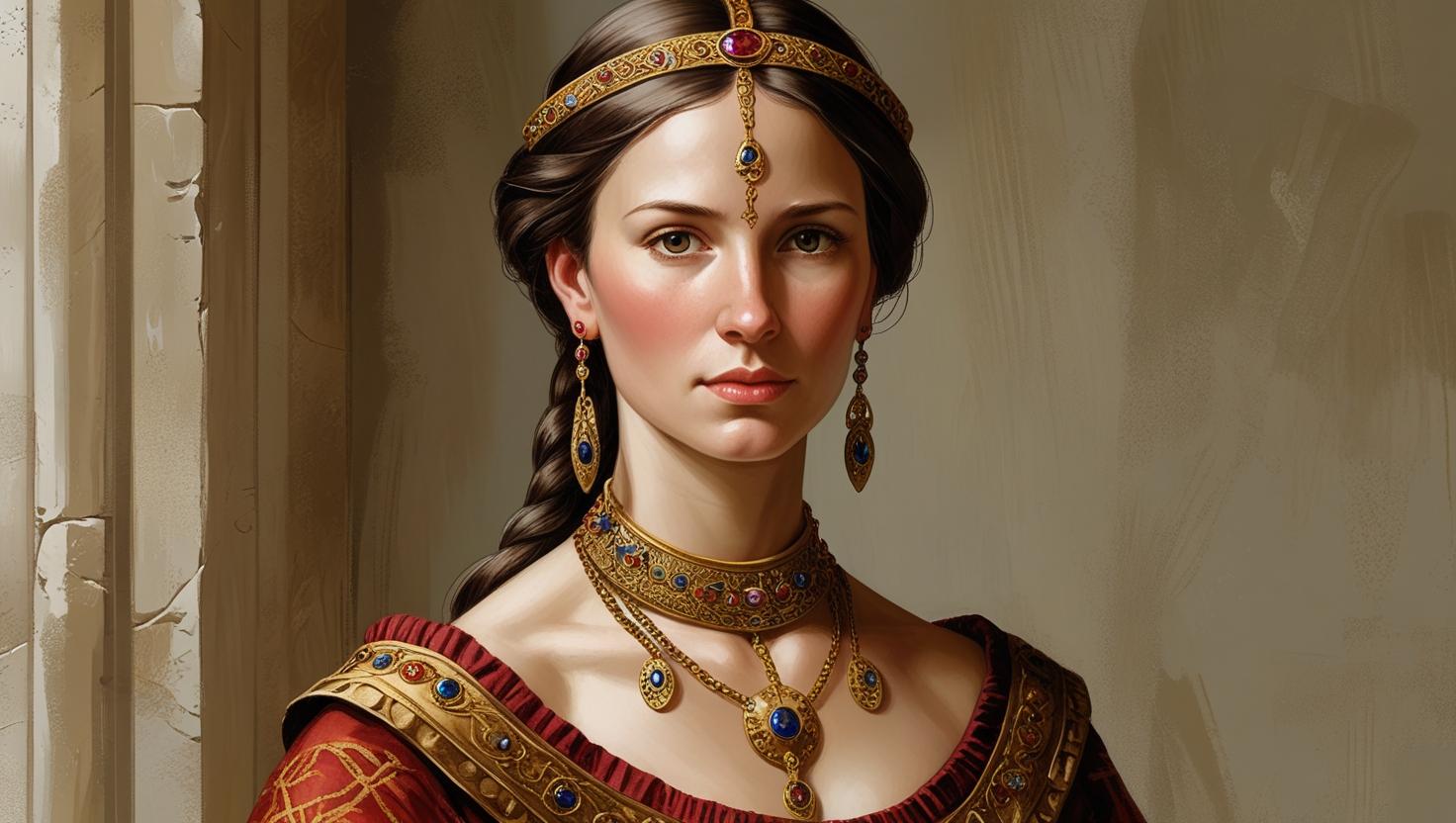
Anglo-Saxon seax image representation (CanvaAI)

In my latest timeslip/dual time novel, Daughter of Mercia, the seax is the starting point of the story and the mystery that Dr Anna Petersen and Prof Matt Beacham need to solve. It’s discovered at an archaeological dig site within a strange burial, and Anna, a specialist in early medieval runes, is called out by Prof Beacham to try to decipher those engraved on this seax.

A seax is a type of short sword or dagger used by Germanic peoples (Angles and Saxons) from around the 5th to the 11th centuries and it was used in a number of ways: as a tool, like a knife to cut food or other items domestically, or as a weapon, or indeed as a symbol of status. Anglo-Saxon society was hierarchical, and the higher classes would be awarded their own special seax as a mark of this.

In my book, the seax is central to my story, but not as a weapon so much as a signifier of status, and the mystery is around the mystifying runic message on its hilt (is it a curse?), and on the reason for its discovery in a weird burial that contains the remains of both a 6th century lady and a modern male.

A typical seax, as we can gather from archaeological evidence in burials (often as grave goods in higher status burials) usually had a single-edged, slightly curved blade varying in length from a few centimetres to 30+ centimetres, the latter especially in the earlier and much later period when used as a weapon. It would have a hilt, or handle, of wood, bone or maybe horn, decorated with complex patterns engraved on it, and often inscriptions. The early inscriptions may be runic and bear messages to the bravery or status of the owner, and may be named. Some seax finds have engravings on the blade as well as the hilt.

In my novel, as Anna surveys the discovered seax, she realises immediately that the finding is unusual and intriguing. She examines the seax, this one a smallish, narrow dagger, but she is surprised at the length of the blade in proportion to the hilt. She knows that this is quite unusual for the main Saxon period. She has the sense of something special, perhaps the possession of someone high, powerful. The seax is single-edged and there are markings on the blade and hilt.

There are braided bands engraved on the blade, its single edge and back are curved towards the tip which is nicely set at the centreline, and she knows that this is so far typical of early Saxon. But the hilt bears runes carved neatly and others seem strangely and rather crudely scratched into it. She realises it’s very early and she can identify a couple of runic symbols that are indicating early Angeln, not Saxon, possibly reflecting an early local dialect of 6th century Mercia, a most unusual find.

She begins to interpret the runic symbols and explains to her assistant: “The Anglo-Saxon variant is known as the ‘futhorc’, d’you remember? Or more accurately fuÞorc with the ‘thorn’ symbol for the ‘th’ sound. But in the rest of the text, as you rightly said, it’s using characters from the Latin alphabet, the Roman script, mixed together with the runes. That could indicate either a transition period or a deliberate purpose on the part of the scribe … runic characters would be gradually replaced by Latin letters, the Latin alphabet in the Roman script, as we know it now, to be more consistent, so different people from different regions could understand them better. And so the old runes eventually died out.”

The seax in my book bears the name ‘Mildryth’ on its hilt. In the 6th century timeline of my novel, Lady Mildryth is the leader or cūning (king – the title given to male and female leaders) of a settlement assigned to her by her father, King Cnebba of Mercia. During her Witan council held in the mead hall the seax is used as a symbol of power and status. The attending thegns bear gleaming shields, swords and seaxes: they “looked for all the world like an army before her, as was customary in the Witan.”

I can imagine that at the Witan, the cūning would sit at the centre of the long table on the dais. Before her would be laid a platter of honeyed cakes and goblets of wine and of mead. On either side would sit ealdormen and highest thegns and perhaps at the end of the table, the chief high ceorl, the official assistant. He would stand and raise his seax, perhaps knocking the hilt upon the table to call for the opening of the Witan council. A Witan sword or perhaps the seax would be held aloft and seaxes or swords clashed upon shields to signal approval of a decision in the council. A seax or Witan sword would be a sign of authority for the leader or other official to speak with no interruption. For Lady Mildryth it has a much graver significance.

In my novel, the mystery of the seax, of Lady Mildryth, and of the strange burial, is at last revealed and has surprising consequences for Dr Anna and Professor Matt.

Read about the mystery in Daughter of Mercia at https://myBook.to/DOMercia

Who are Dr Anna Petersen and Lady Mildryth?

Daughter of Mercia is a timeslip/dual time novel with two main protagonists in each timeline. The two main characters I’ve chosen to tell you about are Dr Anna Petersen (in the present day) and Lady Mildryth (in the 6th century), both complex characters who are the spring-boards for the conflict and action of the novel as their lives intertwine. There are also two male main protagonists: Professor Matt Beacham and Theowulf who are crucial to the plot.

Dr Anna Petersen is in her early 30s, an academic, a medievalist and expert in runology. She’s called out to an archaeological dig by her old adversary Professor Matt Beacham, an archaeologist, who wants her to help in interpreting strange runes on an ancient seax he has discovered in a weird burial on his dig site. This is the starting point of the story. However, Anna is a little hesitant as she has come across Matt previously during an inter-university session on WhatsApp, when she took an instant dislike to him, feeling that he was arrogant and unapproachable. But she’s really fascinated by the burial itself as well as the found artefacts, because there are two remains in the same burial site, one female and early medieval, and the other male and modern. She determines to go to the site to examine the unusual runes and hopefully find out more about the mysterious burial, although she’s haunted by the memory of the last dig she took part in, where a dreadful event took place.

Anna is essentially a strong character, clever, kind and caring, usually well able to stand up for herself in a man’s world, but feels that, in a moment of weakness, she has allowed herself to be taken advantage of, professionally and personally, by her erstwhile colleague, Tom. She is now struggling with being able to trust again and her life is now largely about self-preservation. She also holds a dark secret in her heart related to that experience and she finds it difficult to talk to anyone about it, other than her friend Susie. She wishes she could confide in her beloved mother, but as she is suffering from a terminal illness, Anna doesn’t want to worry her. As her father died long ago, Anna is her mother’s primary carer and the sole custodian of the historic family home and archives. It’s a lot for her young shoulders to bear! And it doesn’t help that Matt seems to blame her for the disappearance of their mutual colleague, Tom.

Lady Mildryth is the young leader of the settlement and its region granted to her by her father, King Cnebba of Mercia. She is named the cūning (‘king’), a title given to male and female leaders although she feels that she must impress her father that she is undoubtedly equal to men, in particular to her brothers who have also been granted small ‘kingdoms’. She feels that she is constantly being spied upon and judged by her father and therefore, although she’s a strong leader, needs to convey an image of strength and wisdom at all times: whether it may be in her dealing with problems within the settlement, or in her image in the Witan council where decisions are made. She’s annoyed with herself when she thinks that she has fallen short of the ideal she has set for herself.

Mildryth needs to be the final arbiter of disputes, the wise head who decides the fate of erring subjects, the judge of appropriate punishments for misdeeds, and the leader who forms the strategy in terms of relationships with neighbouring settlements and of the advisability of battle. She wants nothing more than a peaceful and flourishing future for her people and that is what she sees as her role, not as a warring, blood-thirsty despot or a conquering dictator. Success for Mildryth is the unity of a settled community with plentiful harvests, food stored for harsh winters, and the development of cultural activities, such as the scōp (poet story-teller of historic heroic tales) and the glæman (for music and singing). She follows the new Christian faith but accepts that many of her people still hold to the pagan beliefs of old, and tries to accommodate both views. It’s important for her to maintain harmony in the community. Like Anna, it’s a lot for her young shoulders to bear! Yet, she is still a ‘child of her time’ and when the real challenge comes in the form of an almost unbelievable reality, can she take it?

It is Mildryth’s name that Anna interprets from the runes on the seax hilt in Daughter of Mercia, and thus begins the connection between the two women across the centuries. Both of them experience odd ‘visions’ of each other’s life and times, as Anna starts to discover more about Mildryth’s challenges: her domineering father, her position as leader, and her relationship to the stranger who appears in her settlement, whom she names as Theowulf. In more ways than one, Mildryth challenges the conventions of her time and as a strong, brave and determined young woman she has much in common with Anna. But little do either of them realise how much more they have in common than personality alone. As Anna talks to her bed-bound mother she finds out about her father’s family history and it reveals a whole new dimension to her investigation into the seax, the burial, and to Mildryth herself.

I hope that Daughter of Mercia is a gripping page-turning read, but also that it is thought-provoking and leaves the reader wondering! As one of my reviewers said: ‘I couldn’t stop talking about it for days’.

If you want to read more about Lady Mildryth’s period of history, I have a series (Living with the Anglo Saxons) on my blog here at https://juliaibbotsonauthor.com

My Book Blast one day tour – exhausting!

Exhausting, yes, but exciting! Today I’ve been on tour, from the comfort of my study and my laptop. No waiting around on chilly train stations, or driving with one eye on the satnav trying to get to an unfamiliar venue on time in a strange city, or wondering whether anyone will turn up to the event. No. Another of my virtual book tours, this one with Coffee Pot Book Club tours which specialises in historical novels. They’re at https://thecoffeepotbookclub.blogspot.com/ and the book bloggers are dedicated readers and authors. Do check it out as there are some fabulous sites out there enthusing about books set in all historical periods. I’ve been focusing on virtual book blog tours since covid struck and have continued ever since. So much more relaxing, cosy – and guaranteed audience! Check them all out.

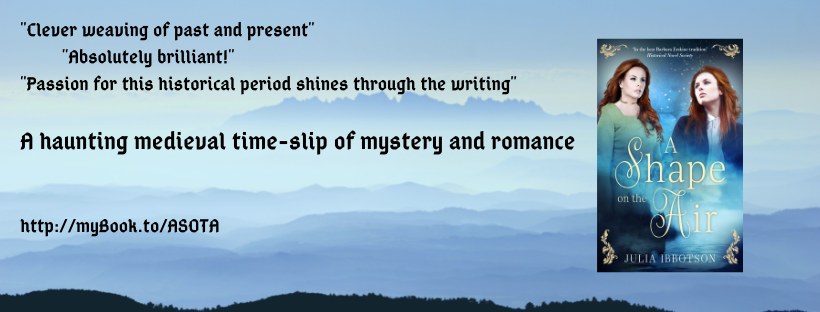
Today was all about the first of my Dr DuLac series (A Shape on the Air) at https://myBook.to/ASOTA a haunting early medieval (Anglo Saxon) timeslip of mystery and romance. It was a reminder of the start of my historical dual time novels as a prelude to further tours for my latest … so

… exciting times: I have two more tours to come, these with my latest novel Daughter of Mercia https://myBook.to/DOMercia 11-17 August with https://zooloosbooktours.co.uk/ and 21 August – 11 September with https://thecoffeepotbookclub.blogspot.com/
Goodness, I’ll be busy this summer!

Virtual Book Tours: what are they?

I love virtual book tours! And above you’ll see an image form one I did recently. But for the uninitiated – what are they?

We’ve all seen (or heard of) authors touring round venues with their new book, doing signings, giving talks, with a schedule of stops/events in a variety of places over a period of maybe a week or two. Nice for the audience of potential readers/followers to meet their writer idol, but exhausting for the poor author! For many of us it can get ‘a bit too much’ – and also interrupt the progress of the next book!

So, virtual book tours – what are they, how do they work, and do they help with promoting a book? I’ve often been asked this by fellow authors. They’ve been around for a while now but they really took off in Covid lockdown when authors couldn’t travel around doing physical face-to-face talks/meet and greet/book signings. That’s when I got hooked!

You don’t need to spend precious time travelling, you do it all online from your desk. Your tour ‘stops’ over a period of 5, 7 or maybe 14 days are book enthusiasts’ blogs on Facebook, twitter, Instagram etc. You may choose to do all-review tours or you may want to provide guest posts, or simply ask for a feature post. In all cases your book cover and details such as a short blurb, author profile, social media links, buy-links etc are posted.

It’s also a better way for readers who may not be able to make a physical event because of other commitments or difficulty travelling to a venue far away or because of health or disability factors. And anyone can access the blog stop and read about a new or favourite author or their new publication! The tour organiser spreads the news of the tour and the links to the stops, on all their socials. They should also provide the author with the schedule containing all the dates on tour and the direct links to each blog/feature. For me, that’s a much more effective promotional tool.

I’ve used virtual book tours for a few years now and can really recommend them – as long as you do your research and choose carefully. There may be a bit of trial and error in finding the tours that suit you and your writing best. Over the years I’ve tried out several. Now I have three that I use regularly, either with a newly published book or to refresh interest in a novel that’s been out there for a while. But there are some I have tried and rejected mainly either because the organiser was too disorganised or they didn’t keep me informed with posts or feedback. Some are ridiculously expensive for what they purport to provide (and some don’t actually fulfil their brief), so look at a range and see how much they vary.

My recent tour is illustrated above – or at least one of the images from the wrap-up from the tour, which gave me some quotations from the reviews. This is one such. Personally, I have a favourite specialist tour for historical novels, because you know that the audience is looking for that genre (although the potential reader may be interested in a different historical period from the one you write in!), a favourite specialist tour for romance, and a more general tour for all genres of novels.

Whether they result in an immediate tsunami of sales or not depends on a number of factors. But they certainly increase your profile, and perhaps bring your name and work before potential new readers. That has to be good!

A Shape on the Air can be found at https://myBook.to/ASOTA

and its sequels, and all my books at https://Author.to/JuliaIbbotsonauthor

The writing process: a ‘dark ages’ time-slip novel

Where did you get the inspiration for the book/series?

To be honest, my ideas come into my mind pretty much unbidden. I’m constantly curious about people, relationships, history, things around me, and I read and research a great deal, but of course it takes a lot of imagination to develop the ideas into a viable story. In the first of the Dr DuLac series, A Shape on the Air, I wanted Dr Viv to have a troubled relationship, to have a traumatic experience that would lead to a time-slip and a deep connection to another woman in the distant past. The idea for A Shape on the Air came from my interest in early medieval history which was my first research field, the post-Roman, early Anglo Saxon era, commonly called the Dark Ages. I’d been reading recent research, mainly archaeological stuff, that supported my view that it wasn’t so ‘dark’ in the sense of barbaric fighting, invasions, and brutality, but that it was actually marked by richness and diversity. I am also very interested in the concept of time and I’d wanted to write a time-slip for ages – but then you have to think, how could it actually happen to normal people in their everyday lives?

Do you write using pen and paper or on a computer?

I write on my computer so that I can easily edit as I go, but my research notes and planning notes and graphs are usually the old pen and paper, and post-its everywhere. I have a pinboard beside my desk and I fill it for the novel I’m currently writing, with pictures from the history I’m writing about and inspiration for characters. For example my inspiration for Dr Viv is a pic of Rachel Weiss (looking elegant and thoughtful) and Rev Rory is James Norton in the role of Rev Sidney Chambers (gorgeous!). And there are lots of pics of early medieval banqueting halls (mead halls), Anglo Saxon warriors and ladies, a dark ancient mere, and the prototype of Viv’s apartment which is actually somewhere I once lived just outside  Oxford.

Who is your favourite character out of your stories and why?

My favourite character is always the one I’m writing at the moment! In A Shape on the Air, I loved Dr Viv/Lady Vivianne (traumatised by Pete’s betrayal/Sir Pelleas’s brutality) and Rev Rory/Sir Roland (a hunk but also sensitive and caring), but I was especially fond of Tilly/Tilda who is very sweet and such fun I really enjoyed writing her.

If you were a character in your story, which would you like to be?

I think it would have to be Lady Vivianne because I guess 499 AD would have been an exciting time to live in, caught between the Roman world and before the Anglo Saxon era was properly established. It was a time of change and uncertainty but also an opportunity for making your mark. Women were respected as part of the leadership of communities and Lady Vivianne holds her own in difficult circumstances. And I think she’s a good person with the interests of her community at heart. Although she was brought up as the daughter of the king/chieftain, she is not arrogant or entitled; she wants a more equal world.

How and why did you choose the names for your main characters?

I started with Lady Vivianne. The names Vivianne, Nimue, Nivian etc are the names associated with the Lady of the Lake in Arthurian legend (which is important in the story) and I had to choose a name that could translate to a modern equivalent, hence Dr Viv. Likewise Sir Roland which was a common name in English and French medieval legend, and then Rory came from that. It was the same for all the other characters in the two time periods. I deliberately didn’t choose totally authentic pre-Anglo Saxon/Britonic names because that wouldn’t have worked with the dual times and additionally, they would have been more difficult to read! It was a conscious decision to approximate a modernisation of historic names. After all, I’m writing characters who are from different ‘tribes’: Briton, Celtic, Roman, Angles, Saxons!

What are your future plans as an author?

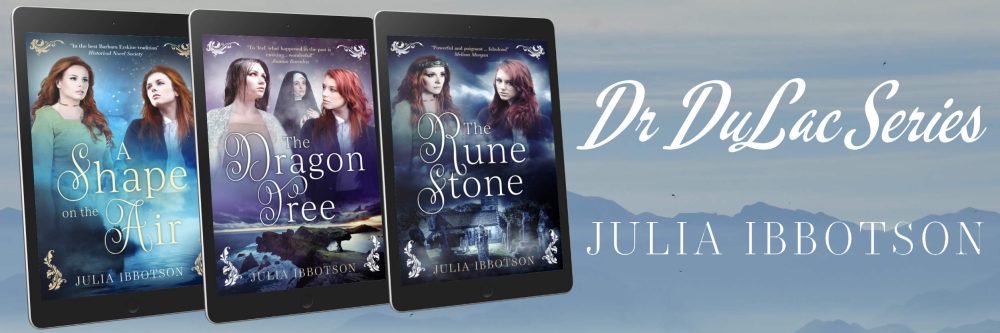
I’ve written the sequel to A Shape on the Air and it’s set in Madeira. It’s provisionally called The Dragon Tree. Again Viv has a traumatic experience, so you can guess what that leads to! It is a time-slip/dual time story and goes back to the 14th and 16th centuries on the island which were fascinating times. I’ve also written the third in the Dr DuLac series, The Rune Stone, which returns to my favourite early medieval mystery. It involved a lot of research into ancient runes which was fascinating. Moving house in between lockdowns created a hiatus for me (so much to do and hard to concentrate) but I’m now starting a new novel, Daughter of Mercia which has cross-overs to the Dr DuLac series. For the moment, I want to stick with early medieval/Anglo-Saxon time-slip mysteries, as this has become my identified author brand. But who knows …?

http://myBook.to/ASOTA

A Chatsworth Christmas

In a corner of Derbyshire

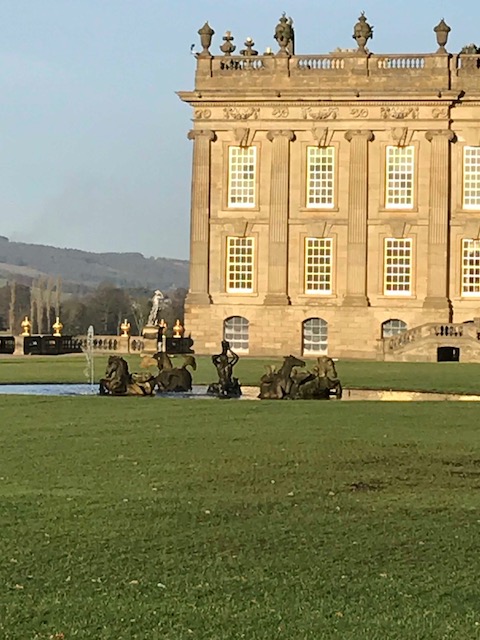
In a beautiful corner of Derbyshire, beyond Matlock, stands the magnificent Chatsworth House and every Christmas it holds a series of special events on an appropriate wintry theme. The grand house is decorated in fantasy and visitors can walk through the different rooms each with a sub-theme. The magic happens every year, but the year that sticks particularly in my mind was the one focused on the Victorian author Charles Dickens, and of course A Christmas Carol loomed large. The scenes in each room were breath-taking and you stand in wonder looking at the amazing detail the designers created.

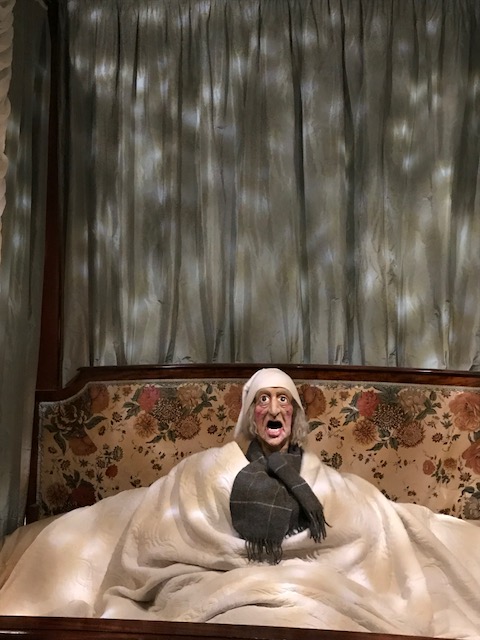
Of course there was a room dedicated to Scrooge’s bedroom, the haunted skeletal figure of the old man sitting up in his four-poster bed staring in wide-eyed horror at the apparition before him. And of course the ghosts of Christmas Past, Present and Future appeared in all their glory.

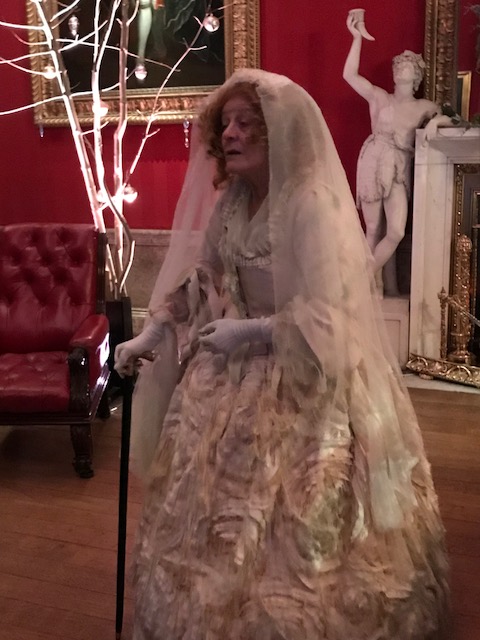
Another room, one of the great banqueting halls was home to Great Expectations, a huge table running the length of the hall, laden with cobweb smothered tableware, candelabras and food. As we drank in the spectacle we startled at the sight of Miss Haversham, in her ancient tattered wedding dress, moving ghost-like across towards us, muttering and moaning.

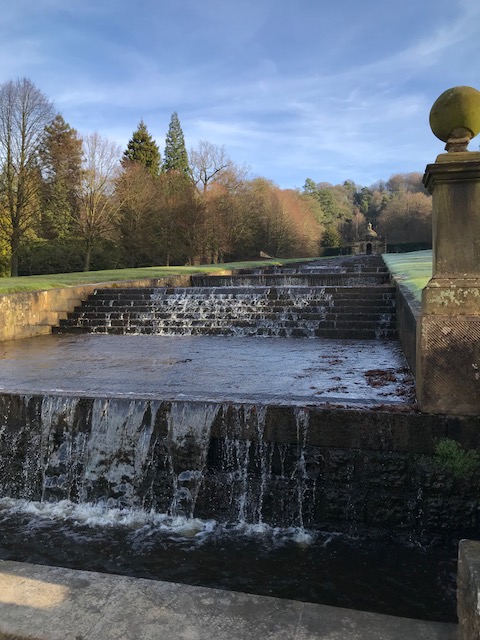
The gardens were frosty that December day and the silvery trees in the park and lining the drive added to the ghostly atmosphere.

Needless to say the gift shop provided many a gift and stocking filler, nicely in time for Christmas.

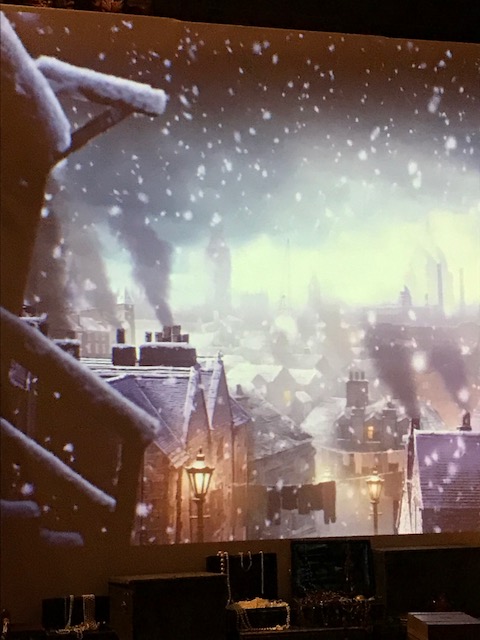
And of course, the cleverly animated snowy scene of Dickensian London prompted me to hurry home to bake my historical recipe of Victorian Boozy Plum Pudding and heat mulled wine from my Christmas Kitchen chapter of The Old Rectory: Escape to a Country Kitchen at http://myBook.to/TheOldRectory

Early history: the ‘dark ages’; time slipping; the time-space continuum – Getting it right

The second day of my book tour and I’ve just stopped at the lovely spot: Books, Life and Everything (I love that name!), for a guest post.

https://bookslifeandeverything.blogspot.com/2020/02/a-shape-on-air-by-julia-ibbotson.html?m=1#more

So, this is what I said …

Researching for a time-slip novel

Anybody else, like me, love the historical novels of Philippa Gregory? History, intrigue, mystery, romance, drama, tragedy – it’s all there. I’ve learned much of my knowledge of the Tudor period from her work. Even though I know they’re novels and not non-fiction academic texts, I still trust that they are reasonably accurate albeit a fictionalised ‘take’ on characters of history. I do know that she has done her research, even though you may disagree with some of her interpretations!

All the authors I know do a lot of research before and during writing their novel, but it’s especially vital if you are writing about a historical period, or a location or a concept, because you have to get it right! There are, believe me, many readers waiting to jump on the slightest inaccuracy – and that’s understandable, and quite right. Readers want to see the novel, even if it’s a fictionalised account of the time or place, as an authority. When I read such a novel I want to feel I’m learning something correct and authentic, not something wrong.

For A Shape on the Air, I had a plot involving Dr Viv DuLac slipping back in time to 499 AD to solve a mystery, so I needed to update my research on the early medieval period and also to research concepts of time. Both of these are areas I love to read about, so it was no hardship. I’d studied medieval language, literature and history at university for my first degree and was fascinated by the Dark Ages (after the Roman rule ended and the early Anglo-Saxon settlements began). There wasn’t (and still isn’t) very much researched and written about the Dark Ages, which is where it got its name, not because it was violent and barbaric (which is what many people think) but because of the lack (darkness) of evidence in archaeology and documents. In some ways I had to use my deductive powers to assess what might have been retained from the earlier Roman period and what might be developing forward into the Anglo-Saxon period. More recently evidence is now appearing, such as from the ‘dig’ at Lyminge in Kent, England, where a fifth century feasting hall had been unearthed not long before I wrote my book. And there is a growing body of archaeological, geophysical and isotopic evidence to indicate how the people of the 5th and 6th centuries lived. But I had to keep up to date with new discoveries, all the time, keeping revisiting published research documents. So there was a fair amount of both evidence and informed imagination at work as I wrote A Shape on the Air.

My research into time-slip was also fascinating. I looked again at the scientific theories of quantum mechanics, which sounds a bit like something from Dr Who, the Einstein-Rosen Bridge, and worm-holes, all basically ideas about space-time portals through which you could slip from one layer of the universe into another, or from one historic period into another. Fascinating, especially for all those who like fantasy and the paranormal, and yet these are real scientific theories of the concept of time, albeit unlikely to be tested by experiment! Strangely enough, I seem to be hearing those theories quoted so much more these days in the media. So maybe something out there is catching on!

Time-slip sounds insane, and of course Viv (in the present day) wonders if she’s going mad when she thinks she’s had a dream but brings back a real golden key from 499 AD! And her ‘dream’ is so real she begins to wonder if she’s taken on the identity of Lady Vivianne, her counterpart in the Dark Ages. How do they fit together? Why are their lives becoming intertwined? Why do they need to reach out to each other across the centuries? Well, I’m afraid that you’ll need to read it and see …!

http://myBook.to/ASOTA

Upcoming Book Tour with A Shape on the Air

The wonderful award-winning book blog tour organiser, Rachel Gilbey, at Rachels Random Resources.com, is hosting a tour with my latest medieval timeslip romance/mystery from 4th to 10th February 2020. The week-long tour is full and I’m excited to see the posts! Many thanks to all the lovely bloggers who are taking part; it’s so much appreciated by authors that there are these enthusiastic readers who spread the word for their work.

My guest posts include thoughts on: Researching a timeslip novel and Deja Vu

and there will be extracts from the book to tempt you and three Q & As that just might reveal some secrets!

http://myBook.to/ASOTA


A Shape on the Air: a historical time slip romance, coming soon

So exciting – A Shape on the Air, my new novel is soon to be published. June is getting closer! I’m busy organising a cover reveal and a book blog tour. What’s it about? It’s a historical (dark ages) time slip romance.

Viv hears shattering news from her partner Pete and she stands to lose her home, her security … everything … So here we go …

Two women 1500 years apart. One need: to save the world they know. Can they help each other to achieve their greatest desire? And what if that world they want is not the one that’s best for them?  University lecturer in medieval studies, Dr Viv Dulac, is devastated when her partner walks out (and with her best friend too!) and threatens her home.  Drunk and desperate, her world quite literally turns upside down and she finds herself in the body of the fifth century Lady Vivianne, who is struggling with the shifting values of the Dark Ages and her forced betrothal to  the brutish Sir Pelleas who is implicated in the death of her parents. Haunted by both Lady Vivianne and by Viv’s own parents’ death and legacy, can Viv  unravel the web of mystery that surrounds and connects their two lives, and bring peace to them both? A haunting story of lives intertwining across the ages, of the triumph of the human spirit and of dreams lost and found.

Cover reveal and pre-order on Amazon coming soon …


Invitation! Authors love Reviews.

Photofunia hearts

INVITATION! A SHOUT OUT FOR REVIEWS!
I’d like to invite folks to write a brief review of any of my books they fancy. Authors are always really grateful if readers do this, and often copy/paste them onto their facebook posts! I’ve now written four books: The Old Rectory: Escape to a Country Kitchen ( a memoir about renovating a Victorian rectory in the heart of the English countryside – with yummy and historical recipes!); Drumbeats and Walking in the Rain (the first two of the Drumbeats trilogy) following Jess from 1960s Ghana to millennium England; and S.C.A.R.S a children’s book (9-14) about a troubled boy who slips into a fantasy medieval world. My new book, A Shape on the Air, is an adult historical time-slip into the Dark Ages. It’s magical and mystical and there’s a mystery to solve and a home to save.
I’ve now captured my direction as a writer. With a love of history and specialising in medieval language and literature, I am now focusing on historical time-slip (both adult romance and children’s adventure). My work will be focused on the medieval period, both the early Dark Ages and the Anglo-Saxon period.
I do hope you will like my books and if you do, it would warm my heart if you could post a review! Many thanks. Just click on the link below and on one of my books to write a brief review!
 http://www.amazon.co.uk/-/e/B0095XG11U