Living with the Anglo-Saxons (3)

What would an Anglo-Saxon ceorl’s house look like?

Reconstruction of Dark Ages Anglo-Saxon thatched wooden hall, built at Bishops Wood Centre, Worcestershire, England.

The image above gives you some idea – they would be wooden and thatched, which is why so little from that time has survived.

A ceorl’s house was basic with few adornments, unlike the homes of the wealthy higher classes, and would have looked to us more like large huts or barns. Indeed the animals would share the room with the family. Ceorls were ‘freed-men’ and often were in charge of a portion of fields or livestock. The family’s own animals, bred for food or milk, were housed at one end of the house for winter shelter: a goat, a cow, a sheep.

The house would measure around 10 metres by 5 metres with wooden floors which could be covered with fragrant herbs. The walls were of upright planks of wood slotted together or of wattle and daub. There were window openings, but no glass, and a central hearth for cooking. There was no chimney and often no hole for the smoke to escape, so the living quarters would have been very smoky and unpleasant especially in winter when the animals joined the family indoors. The roof would be thatched and blackened by the smoke. Bedding would be perhaps a large bag stuffed with straw or wool if the family had sheep to shear.

The family’s table would be a trestle arrangement that could be easily taken down and stored between meals. Food would need to be hung high in the roof, away from predators. They would eat whatever they could acquire from their animals, mainly chicken, pork, beef and lamb, their small plot of land for vegetables, and the hedgerows for berries. Their diet would be fresh as there were few ways of storing: salt was precious for preserving meat, for instance, and ice-houses only for the wealthy. They would drink ale rather than water which was often contaminated. Wine was rare in a ceorl’s house but frequently drunk in the chieftain’s hall. Bread made from spelt, rye or oats, could be baked in communal basic ovens. There was little sugar in their diet and skeletal remains show good dental health. For a sweetener they used honey from their own or communal hives, and this is one of the main ingredients of the favoured alcoholic drink of mead.

Water for washing and cooking could be collected in pots from the stream or village well, if they were lucky enough to have one accessible. The ceorl’s home would have a small plot of land outside the building for vegetables for the family’s use, and nearby a ‘midden’ or primitive toilet area, the contents of which would be used for manure on the vegetable plot.  

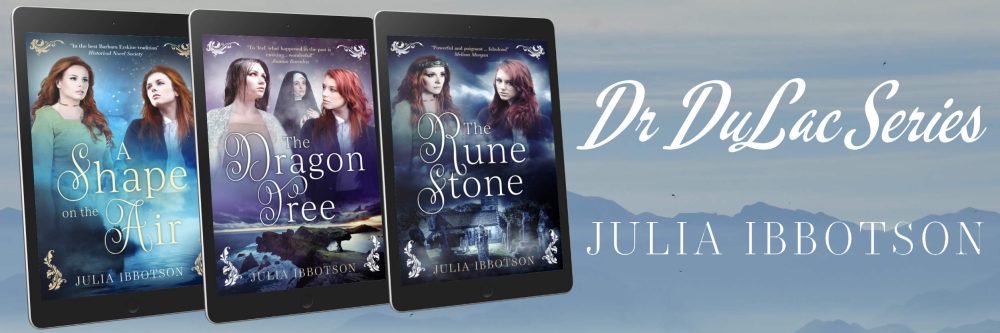
For more, you may like to read my novel A Shape on the Air, an Anglo-Saxon mystery time-slip, set in the present day and 499 AD grounded in detail on domestic life of the time, available at
http://myBook.to/ASOTA

Living with the Anglo-Saxons (1)

Were there different social classes in the early Anglo Saxon period?

Photo by icon0.com on Pexels.com

We can see that throughout history and different cultures, society organises itself into groups and subgroups, usually based on religion or economic standing. In early Anglo-Saxon Britain there were social classes, in some ways similar to our modern understanding of hierarchies, in that there were ‘higher’ and ‘lower’ social classes, but in some ways they were very different from ours today. Anglo-Saxon and Celtic-British settlements were becoming increasingly expansive as the external threats grew. It made sense to band together for security and ‘manpower’. Settlements were headed by the chieftain, or ‘cūning’, from which we derive the word ‘king’. Even where the settlement was headed by a queen (rare!) she was still referred to as the ‘cūning’ in Anglo-Saxon. The word ‘cwene’ (queen) was usually only used for the wife of a king. The heir to the chieftaincy was the ‘ætheling’. Then there were the ‘ealdormen’ (elders) and the ‘thegns’, who were the nobles who were entitled to fight for the king at the head of troops and lead warriors into battle, and thus highly regarded. They often had their own family crests and banners which they fought under.

In early to mid-Anglo-Saxon times, society was strictly hierarchical. The view of society was that people were either freemen (the thegns and ealdormen, owning their own land and goods, often very wealthy, especially if in favour with the king/ cūning) or freed-men (ceorls, granted their freedom but of a low social class), or grant-bearers (the geburs, allowed to work their own small parcel of rented land but still bound to the king) or peasants/servants (villeins bound with no land). At the lowest level of this hierarchical society were the serfs and slaves. It was the chieftain/cūning who personally determined the level of freedom anyone was allotted. In the more enlightened communities social climbing could be allowed, if you kept in the cūning’s good books! Otherwise you were trapped for life: there was no social aspiration through education, for example, or business, and rarely through marriage as alliances amongst the higher levels of society remained politically expedient, not for love – and certainly not for the love of someone in a different class!

http://mybook.to/ASOTA

Who were the early Anglo- Saxons?

early Celtic/Anglo-Saxon cross in a Midlands country churchyard, England

The Roman occupation of Britain during the early fifth century AD began to disperse when Honorius requested the return to Rome of the legions and administrators. The remaining Romans who had intermarried with Britons and Celts, along with the ‘native’ ethnic groups with existing settlements across the countryside of England, strengthened their fortifications against marauders from north of the border. It seems that they had already established organised groups or small ‘kingdoms’ (I won’t call them ‘tribes’ which seems to me to connote primitivism) which were then strengthened and extended, possibly with settlements joining into larger groupings.

These ‘pre-Anglo Saxon’ kingdoms developed gradually as Angle, Saxon and Jutish migrants from northern parts of Europe headed increasingly for Britain, perhaps for land, crops, climate. From around 450 AD, the Anglo-Saxon-Jute communities began to grow, bringing with them their heritage and culture.  

We have long perceived this time as mysterious, dangerous, even barbaric, as ‘invaders’ fought brutally to gain land from the indigenous peoples. The idea, long held, was that as the glory of Rome had gone from our island with the withdrawal of the legions, the British had no defence against the invaders, and that eventually the indigenous ‘tribes’ were overcome and suppressed by the brutal Anglo Saxons. One version has it that the threats to Celtic-British communities or small ‘kingdoms’ led Vortigern, High King of the southern Britons, to call upon Angles, Saxons and Jutes from overseas to help quash the Picts and Scots who threatened his land.

The threat from the north appears to be real but the actions of Vortigern, and indeed his very existence, is disputed. Brutish Anglo Saxon invaders, or migrants who, by and large, integrated relatively peacefully into Celtic-British society? What’s your view?

By the way, the photograph at the top of this post is the original inspiration for the third in the Dr DuLac series, The Rune Stone. It’s called locally, the Saxon cross, but it bears evidence of earlier Celtic influences and suggestions of a very early Celtic/Anglo-Saxon settlement can be detected in the village.

http://myBook.to/ASOTA

http://myBook.to/TDT

http://myBook.to/TRS

Is it time to ditch the ‘Dark Ages’?

Photo by Pixabay on Pexels.com

The ‘Dark Ages’: barbaric, primitive, brutal, murderous? People illiterate, uncivilised. Tribes of Angles and Saxons marauding, hacking their way across Britain and cruelly wiping out the native Britons and Celts, slaying all in their path? Dark dangerous days after the Romans left; everything crumbled, decayed, ruined?

In the first of my Dr DuLac series, A Shape on the Air, one thread in Viv’s narrative is the notion that the ‘dark ages’ tend to be misconstrued as primitive, that the ‘dark ages’ are only dark because we know little about them from the relative paucity of surviving evidence and artefacts. As a specialist in early medieval language, literature and history, I am excited by the idea that this historical period wasn’t primitive and barbaric, but in fact refined with a rich culture from its Roman, Briton and Celtic heritage – and indeed from rich foreign trade. Gold, jewelry, embroideries, tapestry wall hangings, crafted utensils, glass: the feasting halls of the chieftains would have glowed with wealth.

Let’s look at the more recent discoveries about the world of late fifth century Britain, for example the site near Lyminge in Kent, where an early feasting hall has been unearthed and evidence revealed of a good and settled domestic life. The Romans left us with not only an engineering and building heritage but also a cultural one. I am also intrigued by the exploration of the bronze age settlement at Must Farm in the fens, dating from long before the setting of my story, yet revealing a sophistication of crafts, utensils, clothing, domesticity and foreign trade all of which I am convinced would have become a surviving part of the British psyche. Both Lyminge and Must Farm discoveries are mentioned in my story.

Photo by Bruno Scramgnon on Pexels.com

So, archaeological evidence is at last beginning to emerge and we have new and exciting tools to discover more. Domestic archaeology is also beginning to indicate that sites were occupied and developed long after Romans began to leave, and that there was continuity of occupation/population (eg Lyminge, Mucking, Barton Court, Orton Hall, Rinehall, West Heslerton, to name a few). Artefacts and building use suggest that there was a much more gradual change post-Roman occupation and during the migration of new waves of Angles, Saxons and Jutes, rather than a period of decline and sudden brutal invasions. Hence there was a slower cultural shift towards a settled British society. Of course, this is not to say that there weren’t any bitter inter-tribal battles going on for land acquisition, and between local chieftains for power supremacy, nor that there wasn’t deep suspicion of the Angles and Saxons by the native Britons and Celts.

Photo by Kelly Lacy on Pexels.com

But the ‘modernist’ view is that there was much more mingling of Romano-British society than previously thought, through inter-marriage with Romans who remained after the Roman troop withdrawals, and a similar intermingling between Britons and the immigrant Angles and Saxons.

This view of gradual change and evolution from immigration and settlement, rather than sudden brutal change from invasion and suppression by Anglo-Saxon marauders, is one advocated by (among others) Professor Susan Oosthuizen (The Emergence of the English 2019). She offers some fascinating insights into evidence from documentary, archaeological, and landscape studies and her emerging view is that the ‘dark ages’ were not so dark, barbaric and brutal as we had previously imagined.

Battle, UK – 14 October, 2018: Woman in saxon period clothing demonstrating how to make flour using mill stones at a Battle of Hastings reenactment weekend.

So perhaps it’s time to ditch the ‘Dark Ages’ title. So what can we call this post-Roman pre-Anglo-Saxon period instead? Some academics use ‘early medieval’. Oosthuizen uses the term ‘late antique’ for the period 400-600AD (with ‘early medieval’ for 600-850AD). What do you think?

http://myBook.to/ASOTA

The writing process: a ‘dark ages’ time-slip novel

Where did you get the inspiration for the book/series?

To be honest, my ideas come into my mind pretty much unbidden. I’m constantly curious about people, relationships, history, things around me, and I read and research a great deal, but of course it takes a lot of imagination to develop the ideas into a viable story. In the first of the Dr DuLac series, A Shape on the Air, I wanted Dr Viv to have a troubled relationship, to have a traumatic experience that would lead to a time-slip and a deep connection to another woman in the distant past. The idea for A Shape on the Air came from my interest in early medieval history which was my first research field, the post-Roman, early Anglo Saxon era, commonly called the Dark Ages. I’d been reading recent research, mainly archaeological stuff, that supported my view that it wasn’t so ‘dark’ in the sense of barbaric fighting, invasions, and brutality, but that it was actually marked by richness and diversity. I am also very interested in the concept of time and I’d wanted to write a time-slip for ages – but then you have to think, how could it actually happen to normal people in their everyday lives?

Do you write using pen and paper or on a computer?

I write on my computer so that I can easily edit as I go, but my research notes and planning notes and graphs are usually the old pen and paper, and post-its everywhere. I have a pinboard beside my desk and I fill it for the novel I’m currently writing, with pictures from the history I’m writing about and inspiration for characters. For example my inspiration for Dr Viv is a pic of Rachel Weiss (looking elegant and thoughtful) and Rev Rory is James Norton in the role of Rev Sidney Chambers (gorgeous!). And there are lots of pics of early medieval banqueting halls (mead halls), Anglo Saxon warriors and ladies, a dark ancient mere, and the prototype of Viv’s apartment which is actually somewhere I once lived just outside  Oxford.

Who is your favourite character out of your stories and why?

My favourite character is always the one I’m writing at the moment! In A Shape on the Air, I loved Dr Viv/Lady Vivianne (traumatised by Pete’s betrayal/Sir Pelleas’s brutality) and Rev Rory/Sir Roland (a hunk but also sensitive and caring), but I was especially fond of Tilly/Tilda who is very sweet and such fun I really enjoyed writing her.

If you were a character in your story, which would you like to be?

I think it would have to be Lady Vivianne because I guess 499 AD would have been an exciting time to live in, caught between the Roman world and before the Anglo Saxon era was properly established. It was a time of change and uncertainty but also an opportunity for making your mark. Women were respected as part of the leadership of communities and Lady Vivianne holds her own in difficult circumstances. And I think she’s a good person with the interests of her community at heart. Although she was brought up as the daughter of the king/chieftain, she is not arrogant or entitled; she wants a more equal world.

How and why did you choose the names for your main characters?

I started with Lady Vivianne. The names Vivianne, Nimue, Nivian etc are the names associated with the Lady of the Lake in Arthurian legend (which is important in the story) and I had to choose a name that could translate to a modern equivalent, hence Dr Viv. Likewise Sir Roland which was a common name in English and French medieval legend, and then Rory came from that. It was the same for all the other characters in the two time periods. I deliberately didn’t choose totally authentic pre-Anglo Saxon/Britonic names because that wouldn’t have worked with the dual times and additionally, they would have been more difficult to read! It was a conscious decision to approximate a modernisation of historic names. After all, I’m writing characters who are from different ‘tribes’: Briton, Celtic, Roman, Angles, Saxons!

What are your future plans as an author?

I’ve written the sequel to A Shape on the Air and it’s set in Madeira. It’s provisionally called The Dragon Tree. Again Viv has a traumatic experience, so you can guess what that leads to! It is a time-slip/dual time story and goes back to the 14th and 16th centuries on the island which were fascinating times. I’ve also written the third in the Dr DuLac series, The Rune Stone, which returns to my favourite early medieval mystery. It involved a lot of research into ancient runes which was fascinating. Moving house in between lockdowns created a hiatus for me (so much to do and hard to concentrate) but I’m now starting a new novel, Daughter of Mercia which has cross-overs to the Dr DuLac series. For the moment, I want to stick with early medieval/Anglo-Saxon time-slip mysteries, as this has become my identified author brand. But who knows …?

http://myBook.to/ASOTA

Did the Romans really abandon Britain in 410 AD?

Photo by Skitterphoto on Pexels.com

I guess that most of us learned in school that the Romans ditched Britain in 410 AD and abruptly left us to our own devices to run off to protect Rome from the marauding Visigoths. There are many myths about the Roman withdrawal: from the date and ramifications of the withdrawal of troops (was it a sudden departure or a gradual leaving?), to the state of Britain in its wake (did it totally collapse without the Romans to keep us in order or was there an amount of continuity?).

So, firstly, did the Romans really abandon Britain in 410? That has long been the date we assume the Romans left Britain, summoned back by Honorius  to defend Rome. Traditionalists have believed that the Romans abandoned their villas, their culture, and left en masse, for the ignorant Britons and Celts to allow civilisation to go to rack and ruin.

Now a different view is emerging. It appears (eg from studies of Notitia Dignitatum 4th/5th c AD) that Roman military units were still here much later, suggesting a gradual withdrawal over possibly half a century, and even the ‘Honorius edict’ is in dispute. We only have ‘evidence’ written in the 6th ,7th and 8th centuries either by Byzantine officials or writers such as Gildas, Bede and Nennius, who are now regarded by many academics as distant from events, subjective and unreliable.

Did many of the Romans from the occupation remain in Britain, in their military units, intermarrying with Britons and Celts, becoming integrated and merging cultures? I’d like to think so, although that raises a few more questions …

http://myBook.to/ASOTA

Fancy writing a time-slip novel?How hard can it be?

Photo by Ekaterina Bolovtsova on Pexels.com

Fancy writing a time-slip mystery romance novel? How hard can it be? All you have to do is tell the story of someone from the present day finding herself in a different time – easy, right? Wrong! In fact it’s pretty difficult. There are all sorts of issues you have to work out. Why would this person suddenly fall into another time period? How would she do it? What would be the trigger? If she could do it, why couldn’t everyone else? What makes her have this unique ability?

I love reading time-slip; I’m especially keen on Pamela Hartshorne’s novels of time-slip into the Tudor age in York (Time’s Echo, House of Shadows). They’re intriguing and exciting. I’m fascinated by theories of time and the whole concept of what time actually means? All these weird and wonderful theories: quantum mechanics, the Einstein-Bridge theory of portals and worm-holes … Is it all weird – or does it make sense?

When I wrote A Shape on the Air, I’d wanted to write a time-slip story of my own for a long time, but in my case one set in the early medieval times because that’s the period I know best and am most interested in. And I wanted an intriguing mystery involved in the dual time periods. But working it all out resulted in many a restless night, loss of hair and bitten fingernails! I wanted the tone and atmosphere to be a little spooky but still feel realistic and convincing (which isn’t easy if you’re writing about what we normally think of as ghosts). In the end I found writing the ghostly parts the easiest and the mechanics of the time-slip the most difficult.

It seemed to me that my main character, Viv, needed to be someone that anybody could identify with, someone pretty ‘normal’, but make her have a traumatic event in her life which might make her vulnerable and more susceptible to the paranormal. I made her an academic who deals with facts not fantasies, and gave her an awful partner in Pete who announces that he’s leaving her for her best friend – goodness, that would send anyone off balance! – and made her lovely home and the life she knew be at risk. I also made her drink rather a lot of red wine (understandable in the circumstances!) then go for a walk beside a lake!

I then had to make someone in a responsible job commanding authority and respect, empathise and become involved with her strange experience. Who might believe her? Someone whose job is connected with other-worldly things but could be a ‘pillar of society’? It had to be a vicar. So Rev Rory was born. And so was the love interest.

Although it would have been easier for the time-slip trigger to be the lake that started it all off, I didn’t want it to be that obvious, so I had to create a whole back-history for Viv, involving her parents, especially her mother, and their untimely death. Gradually it was coming together like a jigsaw. I can’t explain any more because it would give away the secrets of the book. You’ll just have to read it and find out! I hope you feel intrigued enough to do that, and I hope you enjoy the story. I certainly enjoyed writing it – and guess what? There are two sequels already in the pipe-line, so I’ve had to work it all out again with completely different plots!

And many thanks to the reviewer who said: “she makes the fantastical believable.”

PS. If you want to find out what I’m talking about, you’ll find A Shape on the Air at

http://myBook.to/ASOTA

Deja Vu

Have you ever experienced “déjà vu”?

Have you ever experienced that feeling of ‘déjà vu’? You know, when you suddenly feel a shudder that says ‘I’ve been here before’ or ‘that’s happened to me before’. I’ve had it many times and I’ve thought – “really?” How come we sometimes enter an old house and look around and feel that it still bears the imprints of past inhabitants? I’m not talking about ‘ghosts’ or anything specific or physical, but what I have called in my novel ‘shapes on the air’.

The idea for A Shape on the Air had been brewing in my mind for a long time. I had been reading about, and mulling over,  the notion of time-slip and especially the concept of ‘worm-holes’ and the Einstein-Bridge theory of portals into other dimensions of time and space, in effect quantum mechanics. I know it sounds fanciful and Dr Who-ish, and oddly I’m not a great fan of fantasy, but I felt that this was in fact a more ‘logical’ (in some ways!) and scientific explanation of those everyday glimmers of ‘déjà vu’ and perceptions of the past that many of us experience. Those intimations that maybe the spirits of history are embedded in the fabric of old houses and ancient geology. So, what if we could take it further and, somehow, actually slip into the world of the past, another world but one to which we might have a personal connection, through our own family links perhaps, which still reverberate through us; some kind of glimpse of those shapes on the air.

Could, perhaps, our ancestors somehow reach out across time to ‘touch’ us in this world, not physically but spiritually or emotionally? Watching programmes like ‘Who do you think you are’ where the subjects research their ancestral history, I feel that there is a lot more in their discoveries than merely drawing up a family tree and timeline. They often find a rather eerie connection with their family members, in terms of character, situation, talents, life-views and professions. Of course, many of us, myself included, have looked into our family histories and see nothing at all in common with our ancestors, indeed sometimes they seem totally remote! But I’m aware that those connections and links across time can be there and that’s what I wanted to explore in my book. What if a perfectly rational, normal person could somehow touch another time? What would happen then? And what could go wrong?

The theory of worm-holes and portals through which we could slip across the time-space continuum into other historic periods and places is really only that – a theory. It’s unproven – how could it be otherwise? But it does raise some wonderfully intriguing ideas. Such a gift for a creative writer. And since it is presented by great scientific minds such as Einstein’s, it lends itself to some serious thought.

As the Reverend Rory says in A Shape on the Air, “Just think of the universe. Black holes. Even birth and death. What are they? How come you can suddenly become a thinking person, at birth, and nothing at death.”  At first Dr Viv thinks she may be suffering some kind of temporary insanity after her traumatic experience with her partner Pete and his betrayal of her. She thinks maybe that has triggered the feelings of crossing the time dimension and merging with Lady Vivianne, but as the story progresses it seems that there is more to it than that …

Find out at  http://myBook.to/ASOTA


My writing ritual: stopping for an interview on my book blog tour

One of the stops on my recent book blog tour was at  Bforbookreview.wordpress.com

and it was an interview. Here is a transcript:

– When and where do you prefer to write?

Two main places: I do actually have my own study (husband banned, except for kindly plying me with coffee!) and I work at my antique desk with all my research books and papers handily in the big bookshelf next to me.  For A Shape on the Air, as with all my books, I have a ‘mood board’ on the wall beside me, with pics of inspirations for the main characters (it’s Rachel Weiss and James Norton) and pics that represent Dr Viv’s apartment, the mere and Anglo-Saxon life and times. I also like to write in the conservatory so that I can look out at the garden which gives me peace and inspiration. I write most weekdays as I resigned from the university in order to write fulltime and I try to write a session in the mornings and again in the afternoons, so I keep to ‘office times’ as far as  poss. It doesn’t always work out, though, because if it’s a nice day I want to be outside, walking in the countryside  or gardening!

– Do you have a certain ritual?

My main ritual really is that I go swimming first thing in the mornings (I do 20-30 lengths) and usually have a session in the gym while I’m there. Then when I get back home at about 9.30 I can feel ‘noble’ after my exercise and set my mind to my work. I ALWAYS take my first coffee of the day with me to the study. I check my emails first in case there’s anything I need to address, but I try to avoid social media until I’ve met my target for the day.

Is there a drink or some food that keeps you company while you write?

I’m afraid that I drink far too much fresh coffee while I’m working; I have a coffee pot constantly on the go. But I compensate with camomile tea at other times! I don’t eat while I’m on my computer but I do stop for breaks and usually have fresh fruit – or if I’ve been baking I grab a ginger flapjack or almond macaroon or whatever!

What is your favourite book?

It changes, because I’m an avid reader and the latest one is usually my current favourite. But some stand the test of time in my heart: I love anything by Kate Atkinson and Pamela Hartshorne. I love historicals and time-slips (because this is my ‘brand’ too)!

Would you consider writing a different genre in the future?

I have written in several genres already (contemporary and historical romance, children’s, etc) but at present I see my ‘brand’ as medieval time-slip mystery romance, which is what A Shape on the Air is – and also my WIP (working title The Dragon Tree)which is a sequel.

Do you sometimes base your characters on people you know?

I guess most writers base characters on people they know in some way (we’re terrible people-watchers) but mine are generally amalgamations of different people. I pick characteristics and merge them into my characters, so they are, hopefully, unique.  Possibly some of the characters in the Drumbeats Trilogy were nearer to known people than usual. But characters in A Shape in the Air mix up various friends of mine (don’t tell them!).

 Do you take a notebook everywhere in order to write down ideas that pop up?

I have a glorious collection of beautiful notebooks (constantly added to!) and I do usually have one in my bag, along with some of my collection of gorgeous pens. The only thing is that I tend to get ideas at awkward moments when I can’t pull the notebook out to write them down! I desperately try to keep the ideas in my head until I can scribble them down.

– Which genre do you not like at all?

I like most genres. I love crime, police procedurals and psychological thrillers, but I couldn’t ever write them (I don’t feel qualified enough). I don’t like anything gory or OTT blood-thirsty and I’m not keen on erotica or inflicted pain. I hated Fifty Shades!

– If you had the chance to co-write a book. Whom would it be with?

Barbara Erskine or Susanna Kearsley, because we’re on the same wave-length I think:  medieval -ish time-slip Or maybe my friend Lizzie Lamb: although we write entirely different sorts of books, she’s excellent at marketing and promotion, so I’d feed off her!

If you should travel to a foreign country to do research, which one would you chose and why?

Strangely enough, I’ve just been doing research in Madeira.  My latest WIP is set there and involves its medieval history, 14th and 16th centuries. It’s a time-slip again so there’s present day Madeira to imbibe too. It’s provisionally called The Dragon Tree and it has the same main protagonists as A Shape on the Air: Dr Viv and Rev Rory, because I liked them so much I couldn’t let them go! My next will be the third in the series but they will be back in England at the Derbyshire rectory and my other favourite character (Tilly) will be back.

A Shape on the Air is available from Amazon at

http://myBook.to/ASOTA


Which books make me cry? And 10 fun facts about me – hmm!

My book tour continues! Today I’m interviewed by Jasmine at http://bookreviewsbyjasmine.blogspot.com

She asks me about the books that made me cry and if you scroll down there are also ten fun facts about me that you never knew!

  1. What is the first book that made you cry?

Little Women (Louisa May Alcott) because I was mad with Jo and I thought that the gorgeous male protagonist married the wrong person (trying not to give spoilers). I was very young! Then One Day (David Nicholls) and latterly A Single Thread (Tracy Chevalier). I cry very easily, at just about everything! I even cry at my own books; A Shape on the Air, for example – what happened with Dr Viv’s partner, her mother, betrayal, Lady Vivianne’s betrothal, the mystery they had to solve … I’m almost in tears now!

  1. How long, on average, does it take you to write a book?

I usually reckon 6 months for research and 6 months to write the book. Even if I know the historical research base well (as with early medieval/Anglo-Saxon England which was my original research field), I have to research specifics for that particular book. For A Shape on the Air I had to research minute details of daily life in 499 AD. The same with my Drumbeats Trilogy, which begins in Ghana, West Africa in the 1960s, even though I had lived there I had to research the locations and what was happening at that time (music, books, politics, current events, etc). I love reading about how people lived in a different historical period so it’s a joy to do the research. My problem is where to stop!

  1. How do you select the names of your characters?

Oddly the names often arrive in my head before the complete plot. I tend to have a character and inciting incident/initial situation/conflict before I start. I always have a ‘mood board’ for each novel WIP on my pinboard beside my desk and when I have a picture of my character on it, the name follows pretty quickly. Maybe because when I sit in a restaurant/bus/train and do my naughty ‘people watching’ I give them names as well as jobs and situations. For A Shape on the Air, I chose a picture of Rachel Weiss and thought of Dr Viv, and James Norton and thought of Rev Rory. Don’t ask me why! But it’s also true that I had to find similar names that fitted both time periods: Dr Viv in the present and Lady Vivianne in 499 AD, Rev Rory/Sir Roland, Tilly/Tilda, and so on. I decided not to use completely authentic  names for 499 AD as the characters were from different ‘tribes’ or ethnicities (Roman, Celtic, Briton, Saxon etc) and some would not be so easy to read for the modern reader. For myself, I always found it hard to read names I have to really concentrate on to remember.

  1. What creature do you consider your “spirit animal” to be?

I’d like it to be a wise owl or an elegant horse or gazelle, but it’s probably a cat (curled up by the fire and looking piercingly at what’s going on around).

  1. What fictional character would you want to be friends with in real life?

Cormoran Strike (Robert Galbraith aka JK Rowling). I think he’s fascinating, hard but a softy at heart. He’s had such interesting experiences and I think he’d be full of anecdotes. I feel he’d keep me laughing as well.

  1. Do you have any advice for aspiring writers?

Don’t give up; keep at it and believe in yourself. Read through your finished draft as though you are the reader, not the writer; if it doesn’t capture your attention throughout, then it won’t for anyone else. Make a great opening that grabs the reader’s attention and a great ending that makes them rave about your book. Create memorable characters and get to know them inside out: make a profile of them, what do they look like (very important), what are their little foibles, what are their likes/dislikes, what’s their history? And for heavens’ sake, do your research!

  1. What book do you wish you had written?

Kate Atkinson’s Time After Time.  Brilliant. What an intriguing concept: what if there were different ‘realities’  and history could repeat itself, but change for the better (hopefully). It’s a bit like a time-slip, I guess, but one that actually alters history – something we normally try not to do in time-slips – for the benefit of mankind.

  1. Tell us 10 fun facts about yourself! 🙂
  • I love rhubarb and ginger gin and hate beer
  • I like rugby (watching!) and hate football
  • I love walking in the countryside and hate running (mainly because I have a spinal injury)
  • I love baking for family and friends: my current specialisms are ginger flapjacks (there seems to be a ginger theme going on here!) and almond macaroons, granary bread, and cauliflower & blue stilton cheese soup
  • I love crime novels, police procedurals and psychological thrillers, but I could never write them
  • I like gardening and growing my own vegetables and fruit
  • I’m really into healthy eating – all things fresh and homemade, not shop-bought, plastic wrapped and transport-miles
  • I actually have a PhD! In socio-linguistics, how men and women talk to each other. The research was fascinating!
  • I’m a qualified yoga teacher
  • I love clothes but hate shopping and changing rooms

And there we have it! That’s it for today. Let’s see what tomorrow has in store …